

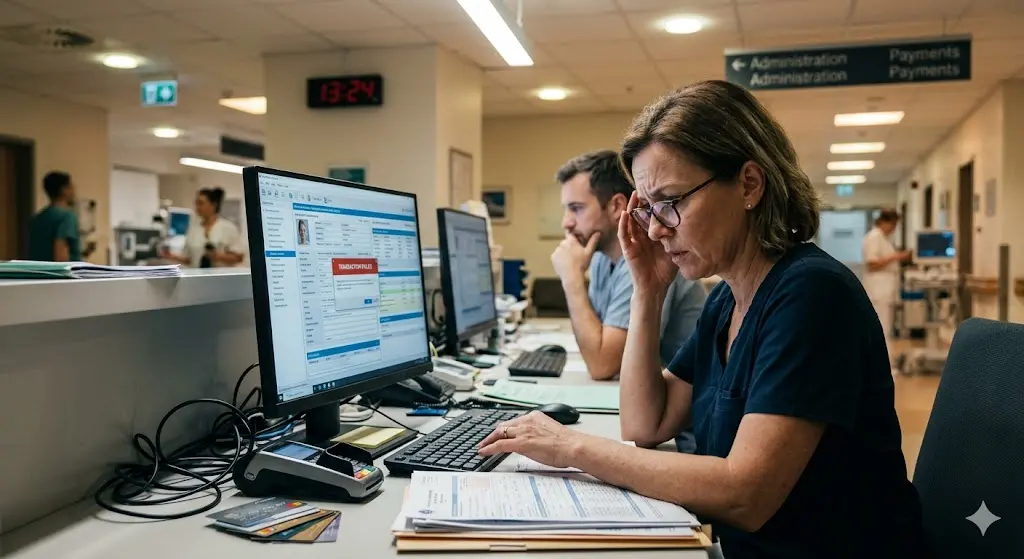
Why digital payments is a growing concern in healthcare worldwide comes down to one major issue: healthcare systems are moving faster toward cashless transactions than many patients can comfortably adapt to. While digital payments improve convenience and speed, they also raise concerns about data privacy, financial security, hidden fees, and unequal access to healthcare services.
Patients today aren’t only asking whether treatment works. They’re asking whether payment systems are safe, transparent, and fair. That shift is changing how healthcare providers operate across the world.
Digital payments are becoming a major concern in healthcare because patients worry about financial security, data privacy, payment transparency, fraud risks, and access inequality. As hospitals and clinics rely more on online billing and mobile transactions, healthcare organizations must balance convenience with trust and patient protection.
What Is Digital Payments in Healthcare?
Digital Payments in Healthcare: Electronic payment methods used for medical services, including mobile wallets, online billing platforms, contactless cards, healthcare apps, and digital insurance processing.
Healthcare payments used to be relatively simple. Patients visited clinics, paid in cash or through insurance systems, and left. Things are different now.
Today, healthcare systems use mobile apps, QR payments, digital insurance verification, subscription billing, automated payment plans, and online portals. On paper, it sounds efficient. Sometimes it is.
But here’s the thing. Healthcare isn’t like ordering food online or booking a taxi. Patients are often stressed, vulnerable, or dealing with emergencies when making financial decisions. That emotional pressure changes how people experience digital transactions.
What most people overlook is that trust matters even more in healthcare payments than in retail transactions. A delayed online shopping refund is annoying. A failed hospital payment during a medical emergency feels terrifying.
That emotional difference explains why digital payments in healthcare are becoming such a sensitive issue worldwide.
Why Digital Payments in Healthcare Matters in 2026
Healthcare systems in 2026 are expected to become even more digitally connected. Hospitals increasingly depend on integrated payment systems tied directly to patient records, insurance databases, and mobile health applications.
Convenience is driving this transition fast.
Patients can now schedule appointments, receive prescriptions, access reports, and pay bills through the same healthcare platform. In many cases, that saves time and reduces paperwork.
Still, there’s another side to this story.
Cybersecurity threats targeting healthcare institutions have increased globally. Medical payment systems now contain financial data alongside deeply personal health records. That combination creates a major risk if systems are breached.
In my experience, many patients don’t fully understand how much personal information gets connected during digital healthcare transactions. They often assume payment systems are isolated from medical databases when they usually aren’t.
Healthcare providers also face growing criticism over hidden digital charges. Processing fees, unclear billing structures, and automated payment deductions can create distrust quickly.
A realistic example might involve a patient using a hospital app to pay for treatment. The transaction works smoothly, but unexpected charges appear later because insurance coverage wasn’t updated correctly. Even if the medical care itself was excellent, trust in the healthcare provider can drop overnight.
And honestly, healthcare organizations sometimes underestimate how emotionally charged financial conversations become during illness.
Expert Tip
Healthcare providers should simplify digital billing explanations before treatment begins. Patients are far more likely to trust payment systems when they understand exactly what they’re paying for.
Why Are Patients Concerned About Digital Payments in Healthcare?
Several interconnected issues are driving global concern around healthcare payment systems.
Data Privacy Risks
Healthcare payment systems collect sensitive information including banking details, insurance records, addresses, and medical history references.
Patients worry about who can access that information and how securely it’s stored.
A data leak involving shopping habits is bad enough. A leak involving medical treatment and financial records feels deeply personal.
Rising Fraud and Cybercrime
Healthcare has become a major target for cybercriminals because medical and financial information is extremely valuable.
Some attacks involve ransomware locking hospital systems. Others involve stolen payment credentials or fake medical billing scams.
Patients hear about these incidents and naturally become more cautious.
Lack of Payment Transparency
Many healthcare bills are confusing even before digital systems enter the picture. Online payment platforms sometimes make the process feel even more complicated.
Unexpected fees, unclear insurance coverage, and automatic deductions frustrate patients fast.
Let me be direct: people rarely complain about paying when pricing feels honest and understandable. They complain when costs feel hidden or unpredictable.
Unequal Access to Digital Systems
Not every patient is comfortable with digital technology.
Older adults, low-income communities, and people in rural regions may struggle with app-based payment systems or online billing portals. Some patients don’t even have reliable internet access.
Healthcare organizations pushing fully digital systems too aggressively risk excluding vulnerable groups.
Technical Failures During Emergencies
This is the part many executives overlook.
A failed payment at a restaurant is inconvenient. A failed payment during emergency treatment creates panic. Patients expect healthcare systems to work smoothly under pressure, especially during urgent situations.
When digital systems crash or malfunction, trust suffers quickly.
How Healthcare Organizations Can Improve Digital Payment Trust Step by Step
Healthcare providers can improve patient confidence by making payment systems safer, clearer, and more human-centered.
1. Strengthen Cybersecurity Protection
Hospitals and clinics must invest seriously in payment security infrastructure.
Patients want reassurance that their financial and medical data is protected from unauthorized access.
Regular security audits and transparent privacy policies matter more now than ever before.
2. Simplify Billing Systems
Complicated invoices confuse patients and create unnecessary stress.
Clear itemized billing, insurance breakdowns, and upfront estimates make digital payments feel more trustworthy.
3. Offer Multiple Payment Options
Not everyone prefers the same payment method.
Healthcare providers should support mobile wallets, cards, bank transfers, installment plans, and traditional payment methods when possible.
Flexibility builds confidence.
4. Train Staff to Explain Payment Systems Clearly
Technology alone doesn’t solve confusion.
Patients often need human guidance during billing conversations, especially when insurance coverage or medical expenses become complicated.
5. Build Emergency Backup Systems
Healthcare organizations need contingency plans if digital systems fail.
Patients feel safer knowing hospitals can still process care even during technical disruptions.
6. Make Accessibility a Priority
Payment systems should work for people of different ages, technical skills, and financial situations.
A healthcare app that looks impressive but confuses elderly patients probably creates more problems than solutions.
The Counterintuitive Problem With Healthcare Digital Payments
Here’s a perspective you probably won’t hear enough.
More automation doesn’t always improve patient satisfaction.
In fact, some healthcare systems have become so automated that patients struggle to reach actual humans during billing issues. That creates frustration fast.
I remember hearing about a patient who spent nearly three weeks trying to dispute a billing error through automated support channels. Nobody responded properly until the patient physically visited the hospital office.
The issue wasn’t the payment technology itself. It was the absence of human support around it.
What most guides miss is that healthcare payments involve emotion, fear, and urgency. Patients aren’t simply consumers making casual purchases. They’re often stressed or vulnerable when interacting with these systems.
That changes everything.
Expert Tip
Healthcare providers should combine automation with real customer support access. Patients trust systems more when they know human help is available if something goes wrong.
How Digital Payments Are Changing Patient Behavior
Digital payments are quietly reshaping how patients approach healthcare decisions.
Some patients now compare healthcare providers partly based on payment convenience. Others delay treatments because online pricing feels confusing or unpredictable.
Subscription-style healthcare models are also growing. Monthly wellness plans, virtual consultations, and app-based healthcare memberships are becoming more common globally.
At first glance, these systems seem practical.
Still, there’s concern that healthcare may start feeling too transactional. Patients worry about becoming “customers” instead of individuals receiving care.
That emotional distinction matters more than many businesses realize.
Another growing trend involves buy-now-pay-later healthcare financing. While installment plans can improve treatment access, they may also increase long-term patient debt if used irresponsibly.
In most cases, patients want flexibility without financial pressure.
Healthcare providers that prioritize transparency and patient education will likely maintain stronger trust moving forward.
Expert Tips: What Actually Works
In my experience, healthcare organizations gain trust faster when they treat digital payments as part of patient care instead of treating them as purely administrative systems.
People remember financial stress almost as vividly as medical stress.
One healthcare clinic reportedly reduced billing complaints significantly after implementing a simple change: every patient received a plain-language payment explanation before treatment started. No confusing jargon. No hidden terms buried in small print.
That small adjustment improved patient confidence immediately.
Here’s what most healthcare systems still get wrong. They focus heavily on payment speed but not enough on payment clarity.
Patients usually don’t mind digital systems when those systems feel transparent, fair, and easy to understand.
Trust grows when patients feel informed instead of pressured.
People Most Asked About Why Digital Payments Is a Growing Concern in Healthcare Worldwide
Why are digital payments important in healthcare?
Digital payments improve convenience, reduce paperwork, speed up billing processes, and support online healthcare services such as telemedicine and app-based consultations.
Why do patients worry about healthcare digital payments?
Patients are concerned about cybersecurity risks, financial fraud, unclear billing practices, hidden fees, and privacy issues connected to medical payment systems.
Are healthcare payment systems safe?
Many healthcare organizations use secure payment technologies, but risks still exist. Cyberattacks targeting hospitals and medical databases continue increasing globally.
How can healthcare providers improve payment trust?
Providers can improve trust by strengthening cybersecurity, simplifying billing explanations, offering flexible payment methods, and ensuring patients can access human support when needed.
Do digital payments increase healthcare accessibility?
In some situations, yes. Online systems can improve convenience for many patients. However, fully digital systems may create barriers for elderly populations or communities with limited internet access.
What role does transparency play in healthcare payments?
Transparency reduces confusion and builds patient confidence. Clear pricing and upfront cost explanations help patients feel more secure during treatment decisions.
Will healthcare become fully cashless in the future?
Probably in many regions, although complete cashless systems may take time. Most healthcare providers will likely continue offering mixed payment options to accommodate different patient needs.
Final Thoughts on Why Digital Payments Is a Growing Concern in Healthcare Worldwide
Why digital payments is a growing concern in healthcare worldwide comes down to trust, transparency, and accessibility. Patients appreciate convenience, but they also expect security, fairness, and human support during financial interactions tied to medical care.
Healthcare systems that prioritize patient understanding alongside digital innovation will likely earn stronger long-term confidence. Those that focus only on automation may struggle to maintain trust in an increasingly skeptical world.
Digital payments aren’t just financial tools anymore. In healthcare, they’ve become part of the patient experience itself.
Businesses, startups, and SEO professionals looking to increase organic traffic and brand visibility can combine powerful online press release distribution with strategic business listing services to secure high authority backlinks, improve SEO ranking, gain wider media coverage, and achieve instant publishing across trusted digital platforms.