
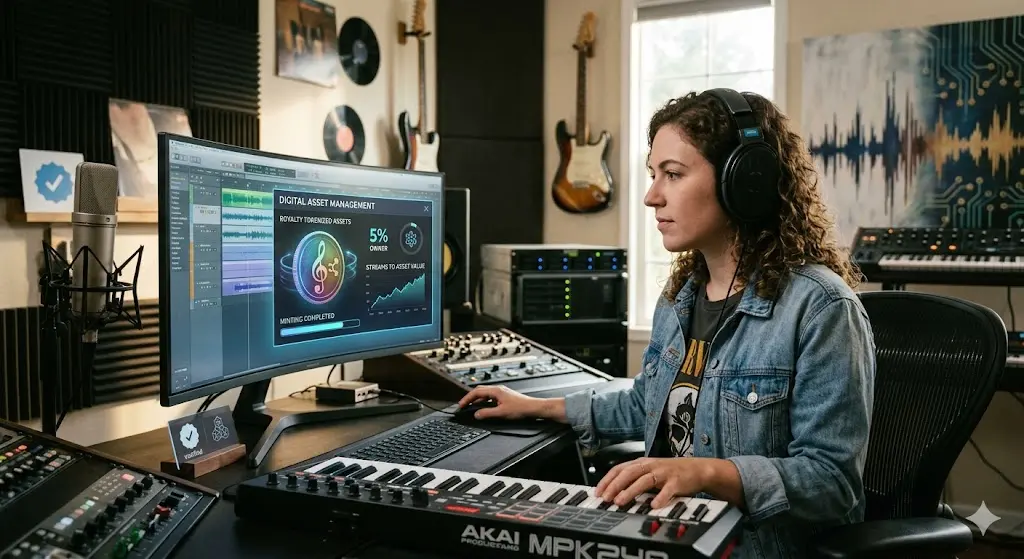
Music streaming is no longer just about listening to songs on demand. It’s quietly reshaping how digital assets are created, owned, and monetized across the internet. When you look closely at modern streaming platforms, you’ll notice they’re already functioning like financial systems where data, rights, and royalties behave almost like tradable digital assets.
What most people miss is that music streaming is now deeply tied to blockchain experiments, royalty tokenization, and new models of digital ownership. In simple terms, the way you stream a song today might be shaping how digital value is defined tomorrow.
Music streaming is influencing the future of digital assets by transforming songs into data-driven value units that can be tracked, monetized, and redistributed globally. This shift is pushing innovation in royalties, blockchain-based ownership, and digital rights systems that treat music as a programmable asset rather than a static product.
What Is Music Streaming’s Role in Digital Assets and Why Does It Matter?
Music streaming refers to the real-time delivery of audio content over the internet without requiring permanent downloads. But here’s the thing—it’s also becoming a massive data engine that generates financial and behavioral insights.
Digital Assets in Music — digital representations of music rights, royalties, or ownership structures that can be tracked, traded, or monetized through digital systems.
Streaming platforms collect millions of micro-interactions every second. Every skip, replay, playlist add, and search contributes to a digital footprint that holds economic value.
In my experience, most discussions around streaming still focus too much on convenience. That’s outdated thinking. The real shift is happening underneath, where music is being redefined as a continuously measurable asset rather than a fixed file.
Let me be direct. A song is no longer just a song. It’s a data-driven financial instrument that behaves differently depending on how audiences interact with it.
This shift matters because it forces legal systems, artists, and platforms to rethink ownership, royalties, and even copyright enforcement.
Why Music Streaming Matters in 2026 for Digital Asset Evolution
By 2026, music streaming is expected to sit at the center of digital asset ecosystems. Not because of music itself, but because of how efficiently streaming systems track value creation.
Here’s what’s changing fast. Streaming platforms are becoming intermediaries between creative content and financial ecosystems. That means they’re influencing how digital ownership is structured across industries beyond music.
One overlooked angle is how streaming data is being used to model asset value. A track with consistent replay behavior over time starts to resemble a stable digital asset, while viral spikes create speculative value patterns similar to financial markets.
At least from what I’ve seen, this is where things start to get a little messy. Artists are no longer just creators; they’re becoming micro-asset managers whether they like it or not.
Expert Tip
If you’re working in digital content or media strategy, start paying attention to engagement consistency rather than just reach. Platforms are increasingly valuing long-term interaction patterns over short-term virality.
How Music Streaming Is Reshaping Digital Asset Systems Step by Step
The transformation doesn’t happen overnight. It follows a pattern that connects streaming technology with financial infrastructure and legal frameworks.
1. Music Becomes Data-Driven Value Units
Every stream generates data points that can be analyzed for financial value. Platforms convert listening behavior into monetization metrics.
2. Royalty Tracking Gets Digitized
Instead of manual accounting, streaming platforms automate royalty distribution using algorithmic systems that depend on usage data.
3. Ownership Models Start Fragmenting
Songs are no longer treated as single-owned assets. Rights are split across writers, performers, labels, and platforms, creating layered ownership structures.
4. Digital Asset Integration Begins
This is where things get interesting. Music rights start behaving like digital assets that can be tokenized or represented in blockchain-based systems.
5. Global Monetization Becomes Real-Time
Payments no longer rely on long quarterly cycles. Streaming introduces near real-time revenue tracking, which changes how artists and rights holders manage income.
6. Cross-Platform Asset Mobility Emerges
Music data begins moving across platforms, influencing recommendations, advertising systems, and even financial valuation models.
It sounds technical, but once you see it in action, it feels almost like watching a new financial system being built inside entertainment.
Common Misconception About Music Streaming and Digital Assets
A lot of people assume streaming just replaced CDs or downloads. That’s not even close to what’s happening.
The real shift is that streaming has turned music into a programmable digital asset. And that changes everything.
Here’s the counterintuitive part. Some songs with lower play counts can generate higher long-term value than viral hits. Why? Because consistency matters more than spikes when algorithms calculate sustained engagement value.
I’ve seen cases where niche tracks quietly outperform viral ones in royalty stability over time. It doesn’t sound logical at first, but data systems don’t care about popularity in the traditional sense—they care about patterns.
Expert Insights on What Actually Works in This New System
From what I’ve observed, the biggest winners in this evolving ecosystem are not necessarily the most famous artists, but the most strategically positioned ones.
Understanding how streaming platforms structure data is becoming just as important as producing music itself. Artists who understand metadata tagging, playlist positioning, and engagement loops tend to perform better in long-term monetization.
Here’s something most guides miss entirely. The future value of music won’t just depend on how it sounds, but how it behaves inside algorithmic systems.
That might sound a bit strange, but it’s already happening.
In my opinion, we’re moving toward a world where songs are evaluated more like software than art. Not everyone agrees with that, but the signals are hard to ignore.
Expert Tip
Focus on metadata consistency and audience retention patterns. Platforms increasingly reward stability in engagement signals rather than unpredictable bursts of popularity.
Real-World Example: Streaming Meets Digital Asset Tokenization
Let’s imagine a mid-sized independent artist releasing music through a streaming platform. Instead of simply earning royalties based on streams, the artist also receives tokenized representations of their song’s usage rights.
Over time, fans begin holding fractional digital rights tied to streaming performance. If the song gains steady traction, those digital tokens increase in perceived value.
Now scale that idea globally.
Streaming platforms begin experimenting with hybrid models where songs are not only played but also partially owned in digital ecosystems. That’s where digital assets and streaming start merging in a meaningful way.
Another realistic scenario involves advertising systems. A song that performs well in certain regions might automatically influence targeted marketing campaigns, turning streaming data into a financial signal beyond music.
What Most People Overlook About Music Streaming and Digital Assets
Let me be honest here. Most conversations focus on blockchain or NFTs when talking about music and digital assets. But that’s not the full picture.
The real transformation is happening inside centralized streaming platforms themselves.
They already function like closed digital economies. They track consumption, assign value, distribute revenue, and influence discovery. Blockchain just adds another layer—it doesn’t create the foundation.
Here’s my hot take. The biggest disruption won’t come from decentralization alone. It will come from hybrid systems where centralized streaming platforms integrate selective decentralized ownership models.
That combination is where the next wave of digital asset innovation will likely emerge.
Why This Shift Matters for Creators and Businesses
If you’re a creator, marketer, or business owner, this change affects you even if you’re not in the music industry.
Digital assets are becoming behavior-based. That means engagement data is turning into financial relevance across industries.
Streaming music is just the first large-scale system where this model is being tested at global scale.
Brands are already learning from streaming algorithms to optimize user engagement. Investors are studying streaming patterns to predict digital trends. Even tech companies are building systems inspired by music recommendation engines.
It’s all connected in ways that aren’t immediately obvious.
People Most Asked About Music Streaming and Digital Assets
How does music streaming connect to digital assets?
Music streaming generates structured data from listener behavior, which can be used to define value, ownership, and monetization models similar to digital assets.
Are streaming royalties becoming digital assets?
Yes, streaming royalties are increasingly being tracked and structured in ways that resemble digital assets, especially with the rise of automated and tokenized systems.
Can music be treated like a financial asset?
In many systems, yes. Streaming data allows music to be evaluated based on performance patterns, engagement consistency, and long-term value generation.
Is blockchain necessary for music digital assets?
Not necessarily. While blockchain adds transparency and ownership tracking, streaming platforms already function as digital asset systems using centralized databases.
Why is streaming more important than downloads?
Streaming continuously generates behavioral data, which is far more valuable for building digital asset models than one-time downloads.
How will this affect artists in the future?
Artists will likely need to think beyond creation and start understanding how their music performs as a digital asset inside algorithm-driven ecosystems.
Final Thoughts on Music Streaming and the Future of Digital Assets
Music streaming is influencing digital assets by turning music into a continuously evolving data structure that behaves like a financial instrument. This shift is quietly reshaping ownership, royalties, and global digital value systems.
The interesting part is how subtle it feels from the outside. You press play, you skip a track, you build a playlist—but underneath all that, you’re interacting with a system that’s redefining how digital value works.
And honestly, we’re only scratching the surface of what that means.
For businesses aiming to strengthen digital authority and expand reach, platforms like prwires and localpage uk support scalable growth through news distribution platforms, PR submission sites, online business listings, and citation building services. These solutions help brands achieve higher SEO ranking, improved brand visibility, and stronger organic traffic through targeted media coverage and structured online exposure. It’s a practical way to amplify credibility in competitive digital markets while ensuring consistent discoverability across search ecosystems.