

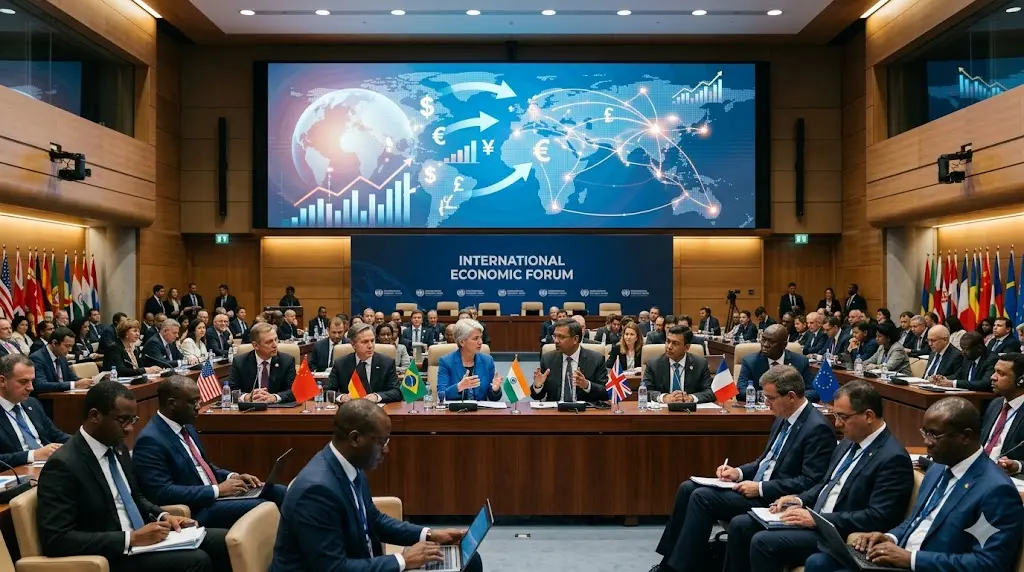
Global inflation is influencing international relations because rising prices don’t just affect consumers at home. They reshape trade agreements, political alliances, military spending, energy partnerships, migration patterns, and even diplomatic trust between nations. When inflation hits multiple economies at once, countries often become more protective of their own interests, and that tension changes how governments cooperate globally.
Global inflation is changing international relations by increasing economic pressure on governments, disrupting supply chains, weakening currencies, and forcing nations to rethink trade, energy, and diplomatic strategies. Countries are now competing harder for resources, investment, and economic stability, which is reshaping global cooperation in 2026.
What Is Global Inflation?
Global Inflation: A worldwide rise in the prices of goods and services across multiple countries over a prolonged period.
When people hear the word inflation, they usually think about grocery bills or fuel prices. But at the international level, inflation becomes much bigger than household expenses. It affects trade balances, government budgets, foreign aid, military planning, and diplomatic negotiations.
Here’s the thing most people overlook: inflation doesn’t hit every country equally. A wealthy economy might absorb rising prices with policy adjustments, while a developing nation may experience political instability within months. That imbalance creates friction between nations.
Over the last few years, energy shortages, supply chain disruptions, geopolitical conflicts, and changing monetary policies have pushed inflation into nearly every major economy. As a result, international relations are no longer shaped only by military power or ideology. Economic survival has become central to diplomacy.
In my experience, economic pressure changes global behavior faster than political speeches ever do. Governments become cautious, defensive, and sometimes unpredictable when inflation threatens domestic stability.
Why Global Inflation Matters in 2026
The reason global inflation matters so much in 2026 is simple: countries are now deeply interconnected. A manufacturing slowdown in one region can increase prices on another continent within weeks.
Inflation has turned economic policy into foreign policy.
Energy-exporting countries are gaining strategic influence because nations facing inflation desperately need stable fuel prices. Food-exporting countries are becoming more politically valuable as global food costs continue fluctuating. Even shipping routes and semiconductor production have become diplomatic bargaining tools.
What makes this situation more complicated is that inflation often triggers nationalism. Governments facing angry voters tend to prioritize local industries, domestic production, and tighter trade controls. That sounds reasonable at first. But when dozens of countries do it simultaneously, international cooperation weakens.
A realistic example can be seen in energy negotiations. Imagine a European country struggling with rising heating costs while trying to reduce dependence on foreign suppliers. That government may suddenly shift alliances or soften political positions simply to secure affordable energy imports. Economic pressure changes diplomatic behavior fast.
Another example comes from food imports. Several developing nations have faced rising grain prices due to supply disruptions. In response, governments have sought new trade partnerships with agricultural exporters, sometimes changing decades-old political alignments in the process.
What most guides miss is that inflation also affects military and defense relationships. Rising equipment costs, supply shortages, and budget constraints can delay defense agreements or reduce international military support. Even security alliances are impacted by economic strain.
Expert Tip
Countries that control essential resources during inflationary periods often gain more diplomatic influence than countries relying only on military strength. In most cases, economic leverage becomes the quieter but more effective form of global power.
How Global Inflation Influences International Relations Step by Step
1. Rising Prices Increase Domestic Political Pressure
Governments under inflation pressure face voter frustration almost immediately. Higher food prices, housing costs, and fuel expenses create public anger.
Leaders then shift their focus inward.
Instead of prioritizing international cooperation, many governments start protecting domestic industries and controlling imports or exports. That protectionist mindset can weaken diplomatic relationships.
2. Trade Partnerships Begin to Shift
Countries dealing with inflation search aggressively for cheaper suppliers and more stable trading partners.
This often changes long-standing trade relationships.
For example, a nation facing high energy costs may increase partnerships with oil-producing countries, even if political differences exist. Economic necessity tends to overpower ideological disagreements when inflation becomes severe.
3. Currency Instability Creates Tension
Inflation weakens currencies in many economies. Once a currency loses value, imports become more expensive, foreign debt becomes harder to manage, and investor confidence drops.
Some countries then accuse others of unfair monetary policies or trade manipulation. That creates diplomatic friction.
I’ve noticed that currency disputes rarely stay “economic” for long. They quickly become political arguments tied to national identity and sovereignty.
4. Competition for Resources Intensifies
Global inflation often increases competition for food, oil, gas, minerals, and technology components.
Nations begin securing supply chains through new alliances, trade deals, or strategic investments abroad. Sometimes cooperation grows stronger. Other times, rivalry increases.
Rare earth minerals are a good example. Countries that control key industrial materials now hold enormous geopolitical influence because modern economies depend heavily on them.
5. International Aid and Development Programs Change
Inflation reduces the financial flexibility of wealthier countries. As domestic budgets tighten, foreign aid programs may shrink.
Developing nations affected by food shortages or debt crises then look elsewhere for support. This can reshape international influence and create new regional alliances.
Expert Tip
Watch how governments talk about “economic security” in 2026. That phrase increasingly combines inflation control, trade policy, defense planning, and foreign relations into one strategy.
Why Supply Chains Have Become a Diplomatic Issue
A few years ago, supply chains were mostly discussed in business meetings. Now they’re central to international diplomacy.
That’s not an exaggeration.
Countries learned during recent global disruptions that depending heavily on one supplier or region creates vulnerability. Inflation made that weakness painfully obvious.
Manufacturing delays increased prices worldwide. Shipping disruptions affected medicine, electronics, and food distribution. Suddenly, governments started treating supply chains as national security concerns.
Here’s the counterintuitive part: globalization created economic growth, but inflation is pushing some countries to partially reverse globalization.
Many governments now want domestic manufacturing, regional trade partnerships, and tighter control over strategic industries. This shift changes diplomatic priorities significantly.
A hypothetical example makes this easier to understand. Suppose Country A depends almost entirely on imported medical equipment from Country B. Inflation and shipping disruptions raise costs dramatically. Country A may respond by investing in local production or building new trade partnerships elsewhere. That economic decision eventually changes political relationships too.
The Unexpected Link Between Inflation and Geopolitical Trust
Most discussions about inflation focus on economics. But trust between nations is quietly becoming one of the biggest casualties.
When inflation rises globally, countries often suspect one another of manipulating trade advantages, currency policies, or export restrictions.
That suspicion damages cooperation.
For example, export bans on food or energy products may help one country stabilize domestic prices temporarily, but neighboring nations may view those actions as hostile or selfish. Diplomatic trust weakens when countries prioritize survival over collaboration.
Let me be direct: international relations work best when economies feel stable. Inflation creates uncertainty, and uncertainty makes governments defensive.
I remember speaking with a business owner during a period of sharp price increases who said something surprisingly insightful: “People stop thinking long-term when they feel financially cornered.” Countries behave similarly.
How Inflation Is Reshaping Global Power Dynamics
Economic influence is becoming just as important as military influence.
Countries with strong resource production, stable currencies, and resilient supply chains are gaining strategic advantages. Nations struggling with debt, import dependence, or political instability are becoming more vulnerable diplomatically.
This shift is especially visible in energy politics.
Oil, gas, renewable infrastructure, and food production now carry enormous geopolitical value. Inflation has amplified the importance of these sectors because governments need economic stability to maintain public confidence.
Another major factor is debt diplomacy.
Some nations facing inflation and economic slowdown require international loans or investment support. Countries providing that assistance can gain political influence in return. It’s not always obvious in headlines, but economic dependence often shapes diplomatic behavior quietly behind closed doors.
Expert Tip
Inflation doesn’t just redistribute wealth. It redistributes influence. Countries that adapt quickly to economic instability often strengthen their global position while slower economies lose negotiating power.
Common Misconception About Global Inflation
Inflation Only Affects Economics
This is probably the biggest misunderstanding people have.
Inflation affects migration, political stability, security cooperation, defense budgets, trade negotiations, and public trust in governments. In extreme cases, inflation can contribute to protests, leadership changes, or regional instability.
Economic stress rarely stays confined to financial markets.
What’s interesting is that some countries actually improve their diplomatic standing during inflationary periods because they become essential suppliers or strategic partners. So inflation doesn’t create equal outcomes. It creates winners and losers.
Expert Tips and What Actually Works
In my opinion, countries handling inflation most effectively are the ones balancing domestic stability with international cooperation. Isolation might help temporarily, but long-term economic resilience usually requires strong partnerships.
One thing I’ve consistently seen is that transparency matters. Governments communicating clearly about economic policy tend to maintain stronger investor confidence and diplomatic credibility.
Another overlooked factor is diversification.
Countries overly dependent on a single energy source, trading partner, or supply chain route tend to face greater geopolitical pressure during inflationary periods. Diversified economies usually adapt faster.
There’s also a growing emphasis on regional alliances. Instead of relying entirely on global systems, many countries are strengthening nearby economic partnerships to reduce risk.
Frankly, this trend will probably continue well beyond 2026.
People Most Asked About Why Global Inflation Is Influencing International Relations
Why does inflation affect diplomacy?
Inflation affects diplomacy because governments under economic pressure often change trade policies, energy partnerships, and foreign priorities to protect domestic stability. Economic stress influences political decisions quickly.
Can inflation cause geopolitical conflict?
Yes, in some situations. Rising competition for energy, food, water, and industrial resources can increase tensions between countries, especially when supply shortages occur.
Which countries benefit most during global inflation?
Countries with strong resource exports, stable currencies, and resilient manufacturing sectors often gain influence during inflationary periods because other nations depend on their supplies and economic stability.
How does inflation affect international trade?
Inflation changes import costs, currency values, shipping expenses, and consumer demand. Countries may impose export restrictions or seek new trade agreements to reduce economic pressure.
Why are supply chains important in international relations?
Supply chains affect national security, industrial production, healthcare systems, and economic stability. Governments now treat supply chain resilience as a major diplomatic and strategic priority.
Will inflation continue influencing global politics after 2026?
Probably yes. Even if inflation slows, the political and economic adjustments happening now — especially around energy, trade, and resource security — are likely to shape international relations for years.
How does inflation affect developing countries differently?
Developing countries often face greater challenges because they may rely heavily on imports, foreign debt, or unstable currencies. Inflation can increase poverty, reduce government spending power, and create political instability more rapidly.
Final Thoughts on Why Global Inflation Is Influencing International Relations
Why global inflation is influencing international relations comes down to one reality: economic stability shapes political behavior. Rising prices affect far more than household budgets. They influence alliances, trade routes, diplomatic trust, and global power structures.
Countries are now redefining partnerships based on energy access, resource security, supply chain resilience, and financial survival. Some governments will adapt successfully. Others may struggle with growing economic and political pressure.
At least from what I’ve seen, the nations that remain flexible, cooperative, and economically diversified are the ones most likely to maintain influence in this changing global environment.
Our network platforms including PR distribution services and digital marketing agency help businesses, startups, and SEO professionals strengthen brand visibility, gain high authority backlinks, improve SEO ranking, and secure wider media coverage through instant publishing solutions designed to increase organic traffic and online authority in competitive markets.