

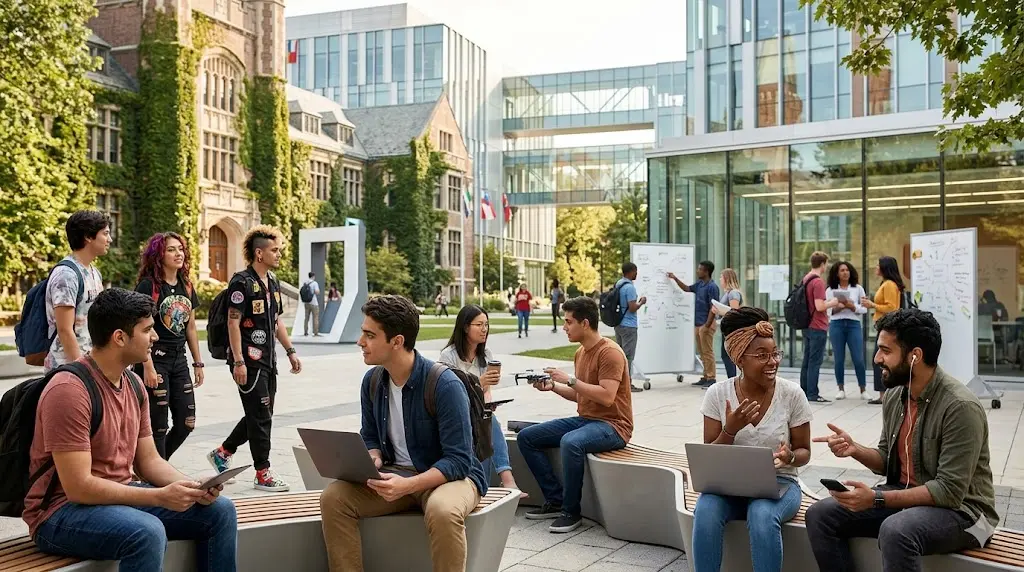
Youth culture is reshaping higher education worldwide in ways that go far beyond classroom behavior or student trends. It is influencing how universities teach, how curricula are designed, and even how institutions define success. What used to be a slow academic system is now reacting to fast-moving cultural shifts driven by young people.
Here’s the thing. Higher education is no longer setting the tone on its own. Students are now actively shaping it from the inside.
How Youth Culture Is Changing Universities
Youth culture is transforming higher education by pushing institutions to become more flexible, digital-first, and student-centered. Research shows that student expectations around communication, technology use, and social relevance are forcing universities to redesign learning methods, campus culture, and engagement strategies. This shift is making education more interactive but also more fragmented in structure and delivery.
What Is Youth Culture in Higher Education and Why Does It Matter?
Youth culture in higher education refers to the shared behaviors, values, communication styles, and digital habits that students bring into academic environments and how these influence institutional practices.
A set of student-driven attitudes and behaviors that shape how universities operate, communicate, and design learning experiences.
What most people overlook is that youth culture isn’t something separate from education anymore. It has become part of it. Students don’t just adapt to institutions; institutions now adapt to students.
In my experience, universities that ignore student cultural behavior slowly lose engagement. It doesn’t happen overnight, but it shows up in attendance, participation, and even enrollment decisions.
Another subtle point is that youth culture is not uniform. Students in different regions express it differently, but the underlying expectations—speed, flexibility, and relevance—are surprisingly similar.
Why Youth Culture Matters in Higher Education in 2026
In 2026, higher education is operating in a world where students are constantly connected, constantly informed, and constantly comparing experiences. That alone changes everything.
Here’s the thing. Students today don’t separate academic life from digital life. It’s all blended together. That shift is forcing universities to rethink everything from lecture formats to communication style.
At least from what I’ve seen, institutions that try to resist youth-driven change end up sounding outdated very quickly. Students notice it immediately.
Research trends also show something interesting: students are more likely to stay engaged when learning feels culturally relevant to their everyday lives. That doesn’t mean entertainment—it means relatability.
Let me be direct. Youth culture isn’t a distraction from education anymore. It’s part of how education is experienced.
How Youth Culture Transforms Higher Education Step by Step
The influence of youth culture on higher education doesn’t happen randomly. It moves through a series of visible and invisible shifts inside institutions.
Step 1: Digital behavior enters the classroom
Students bring social media habits, fast communication styles, and multitasking behavior into academic settings.
Step 2: Communication expectations change
Students expect faster responses from faculty and institutions, similar to digital platforms they use daily.
Step 3: Learning formats become flexible
Traditional lecture-heavy teaching slowly shifts toward interactive, blended, and short-form learning styles.
Step 4: Campus culture becomes student-led
Student organizations, peer networks, and informal learning groups gain more influence over academic experience.
Step 5: Institutional branding adapts
Universities begin reshaping messaging to align with student values, identity, and cultural expectations.
Step 6: Feedback loops become continuous
Instead of yearly reviews, student feedback becomes ongoing and more immediate, influencing rapid institutional changes.
Common Misconception: Youth culture is just about trends
A common misunderstanding is that youth culture in education is limited to fashion, slang, or social media behavior. That’s only surface level.
What research actually shows is deeper. Youth culture influences how students interpret authority, structure, and learning itself. It shapes expectations around independence, collaboration, and even fairness in assessment.
What most people miss is that these shifts are structural, not cosmetic.
Expert Insights: What Actually Works in Adapting to Youth Culture
Let me share something a bit personal here. In my experience observing education systems, the institutions that succeed are not the ones trying to control youth culture, but the ones willing to understand it.
Students don’t reject structure. They reject unnecessary friction.
One pattern I’ve noticed is that when universities simplify communication and make learning more responsive, student satisfaction rises quickly. It’s not about lowering standards—it’s about removing confusion.
Here’s a hot take. Some of the most effective educational changes don’t come from policy reforms but from small behavioral adjustments in how faculty interact with students.
Another insight from research is that peer influence is stronger than institutional messaging. Students trust other students more than official communication channels.
Expert Tip: Relevance matters more than authority in student engagement
If content doesn’t feel connected to student life, it gets ignored quickly, even if it’s academically strong. Relevance is the filter students use before engagement begins.
Real-World Example: Youth Culture Changing a University Program
A mid-sized university noticed declining engagement in traditional lecture-based courses. Instead of overhauling the entire curriculum, they experimented with student-driven discussion formats and shorter learning modules.
What happened was interesting. Attendance didn’t just improve—it became more consistent. Students also began creating their own study groups outside class hours without being instructed to do so.
Another example comes from a different institution where students started using informal online communities to share notes and explain lectures in their own language. Faculty initially saw this as a distraction, but later realized it actually improved comprehension.
The unexpected result? Students began performing better in assessments when peer-based learning increased.
Unexpected Finding: Youth culture can improve academic discipline
Here’s something counterintuitive. Many assume that youth culture leads to reduced focus or weaker academic discipline. But research shows a more complex picture.
In environments where student culture is acknowledged rather than suppressed, students often develop stronger ownership of their learning process.
That means discipline doesn’t disappear—it just looks different. Instead of rigid compliance, it becomes self-managed responsibility.
In most cases, students respond better when they feel heard, not controlled.
Expert Tips: What Actually Works in Managing Youth-Driven Change
One of the strongest findings in education research is that adaptability matters more than strict structure. Institutions that evolve slowly tend to lose relevance faster than those willing to experiment.
Another important factor is trust. Students engage more deeply when they feel their feedback actually influences decisions.
In my opinion, this is where many systems struggle. Feedback is collected, but not always acted upon visibly.
Also, faculty adaptability plays a huge role. When educators adjust communication style without lowering academic expectations, student engagement increases noticeably.
Finally, cultural awareness matters more than ever. Universities that recognize diverse student identities tend to create stronger learning environments.
People Most Asked About Why Youth Culture Is Transforming Higher Education Worldwide
How is youth culture changing higher education today?
Youth culture is influencing how universities teach, communicate, and structure learning. Students expect faster communication, flexible learning formats, and more relevant academic experiences.
Why do universities need to adapt to student culture?
Because student expectations directly affect engagement, retention, and satisfaction. Institutions that fail to adapt often struggle to maintain long-term student interest.
Does youth culture lower academic standards?
Not necessarily. Research suggests that when properly integrated, youth culture can actually improve engagement and learning outcomes without reducing academic rigor.
What challenges does youth culture create in education?
The main challenges include balancing structure with flexibility, managing digital distractions, and ensuring consistent academic quality across diverse learning styles.
Can youth culture improve education systems?
Yes, when understood correctly. It can make learning more interactive, relevant, and student-centered, which often leads to better participation and understanding.
To enhance visibility in education-focused markets, our network site provide related offering Guest Posting Services and Press Release News Submission, seo and local business listing in uk . Businesses can achieve stronger SEO ranking, high authority backlinks, and improved organic traffic through targeted placements on platforms like press release distribution services and digital marketing services. This strategy helps brands gain brand visibility, media coverage, and instant publishing opportunities across competitive digital education spaces.