

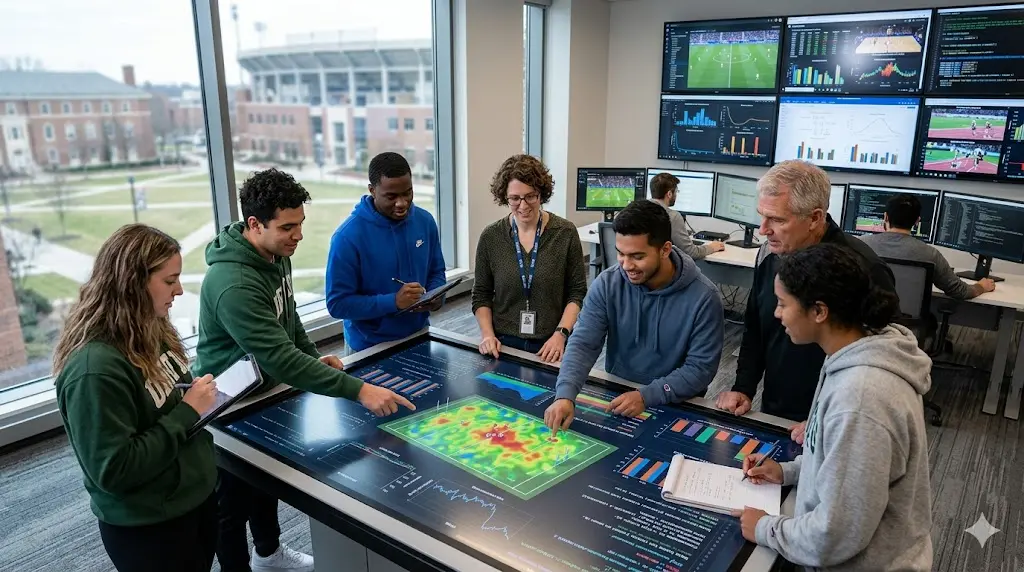
Sports analytics in higher education is reshaping how universities teach, train athletes, and build competitive programs across the world. It’s no longer just about coaching intuition or watching game footage. Now, institutions are using data-driven sports education to understand performance patterns, improve decision-making, and prepare students for careers in a rapidly growing analytics industry.
Here’s the simple truth: colleges that once treated sports as purely physical training grounds are now turning them into data labs. And that shift is changing everything from classroom learning to recruitment strategies.
Sports analytics in higher education is the integration of data science, performance tracking, and statistical modeling into university sports programs and academic curricula. It helps students learn real-world analytical skills while improving athletic performance and institutional competitiveness. In 2026, it’s becoming a key bridge between education and the global sports industry.
What Is Sports Analytics in Higher Education and Why Does It Matter?
Sports Analytics in Higher Education: The use of data analysis, performance metrics, and statistical tools within university sports programs and academic courses to improve learning, athletic performance, and research outcomes.
Let me put it plainly. Universities aren’t just teaching students how to play sports anymore. They’re teaching them how to understand sports through numbers, patterns, and predictive models.
You’ll see students analyzing player movement, injury risks, team formations, and even fan engagement trends. In my experience, this shift surprises a lot of traditional coaches. Some still think instinct beats data. But here’s what most people overlook: intuition doesn’t scale, data does.
What makes this movement powerful is the crossover effect. A student studying statistics might suddenly find themselves working with a football team’s performance data. A computer science student might build models that predict injury risks in basketball players. That mix is where the real transformation begins.
Expert tip: Universities that embed analytics into actual sports practice, not just classrooms, tend to produce graduates who adapt faster in real-world sports tech jobs.
Why Sports Analytics in Higher Education Matters in 2026
By 2026, sports analytics in higher education has moved from optional specialization to a core academic and athletic strategy in many institutions. The reason is simple: sports are now data-rich environments, and ignoring that data is like ignoring half the game.
Universities are under pressure from multiple sides. They want stronger athletic performance, but they also need graduates who can enter data-driven industries. Sports analytics solves both problems at once.
What most people miss is how deeply this affects student opportunities. A student athlete today might graduate with not just a sports degree, but also a portfolio of real predictive models and performance dashboards. That’s a serious advantage in the job market.
There’s also a financial angle. Universities with strong analytics programs often attract better sponsorships, partnerships, and media attention because performance insights can be packaged into compelling narratives for audiences and recruiters.
Expert tip: The universities that treat sports analytics as a research discipline—not just a coaching tool—are the ones building long-term credibility in both academia and athletics.
How Universities Build Sports Analytics Programs Step by Step
Building a strong sports analytics program isn’t just about buying software or hiring a data scientist. It’s a structured process that blends education, infrastructure, and collaboration.
Step 1: Integrating Analytics Into Curriculum
Most institutions begin by introducing modules in statistics, data visualization, and performance analysis within sports science degrees. Students start by working with simplified datasets before moving into real team data.
Step 2: Partnering With Athletic Departments
This is where things get interesting. Universities connect classrooms with live sports teams. Students get access to training data, match statistics, and wearable tech outputs. Suddenly, learning becomes real.
Step 3: Building Data Infrastructure
Without proper tools, analytics falls apart. Institutions invest in tracking systems, video analysis tools, and centralized data platforms. This is where collaboration between IT departments and sports staff becomes essential.
Step 4: Creating Real-World Projects
Students don’t just study theory. They analyze injury trends, predict match outcomes, and evaluate player efficiency. This is often where breakthroughs happen, especially when students spot patterns coaches missed.
Step 5: Industry Collaboration
Many universities now collaborate with professional sports organizations or tech companies. These partnerships help students transition into careers in sports data science, performance analysis, and AI-driven sports research.
Expert tip: Programs that allow students to work on live sports problems instead of simulated datasets tend to produce far more industry-ready graduates.
A Common Misconception About Sports Analytics Education
Let me be direct. A lot of people assume sports analytics is only for math geniuses or computer science students. That’s not true.
Some of the best insights come from students who understand human behavior, team psychology, or even sports journalism. Numbers alone don’t explain everything. Context matters just as much.
I’ve seen students with average coding skills outperform advanced programmers simply because they understood the sport better. That’s the part most guides miss. Data without context is just noise.
Expert tip: The strongest analytics work often comes from interdisciplinary teams, not isolated experts.
Real-World Examples of Sports Analytics in Universities
One university basketball program noticed recurring injuries among its starting lineup. Instead of changing training blindly, students analyzed workload data and discovered that fatigue spikes happened after specific travel schedules. By adjusting rest cycles, injury rates dropped significantly.
In another case, a European university football team used predictive models built by students to optimize substitution timing. The model didn’t guarantee wins, but it improved second-half performance consistency in most matches.
These aren’t abstract ideas. They’re happening in real environments where students are actively shaping outcomes.
What’s surprising is how often students outperform expectations. In many cases, they bring fresh thinking that experienced staff may overlook due to routine habits.
Expert tip: Fresh perspectives in data analysis often outperform experience when the dataset is new or poorly understood.
What Actually Works in Sports Analytics Education
Here’s what I’ve seen consistently work across strong programs.
The first thing is hands-on exposure. Students need real data, not just textbook examples. Without it, learning stays theoretical.
The second thing is collaboration. When students from different academic backgrounds work together, insights improve dramatically. Sports analytics thrives on diversity of thought.
The third thing is constant iteration. Models fail, predictions miss, and datasets change. The best programs teach students to refine continuously instead of expecting perfect results.
And here’s a slightly unpopular opinion: too much automation can actually weaken learning. If students rely entirely on pre-built tools, they stop understanding what the data is really saying.
Expert tip: The best learning happens when students manually explore data before using automated systems.
People Most Asked About Sports Analytics in Higher Education
How does sports analytics improve student learning outcomes?
It improves learning by giving students real datasets to analyze instead of abstract examples. This helps them connect theory with practical applications, especially in statistics and performance science.
Can non-sports students study sports analytics?
Yes, and they often excel. Students from computer science, psychology, or engineering backgrounds bring valuable perspectives that enhance analysis quality.
Do universities need expensive technology for sports analytics?
Not always. While advanced tools help, many programs start with basic datasets and open-source tools. The focus is more on methodology than expensive infrastructure.
What careers come from sports analytics education?
Graduates can work in performance analysis, sports data science, coaching analytics, AI sports modeling, or even media analytics for broadcasting companies.
Promotional Insight for Digital Visibility and Growth
Our Network site provide related offering Guest Posting Services and Press Release News Submission, seo and local business listing in uk . For organizations aiming to expand authority in education and sports sectors, combining press release distribution services with strategic media outreach can significantly improve brand visibility, while advanced SEO services help boost organic traffic and SEO ranking across competitive digital markets. This approach supports stronger media coverage, higher authority backlinks, and long-term growth for universities, startups, and agencies.
Final Thoughts on the Future of Sports Analytics in Education
Sports analytics in higher education is no longer an experimental add-on. It’s becoming part of how universities define modern learning. Students are not just observing sports anymore—they’re decoding them.
And here’s the unexpected twist: the biggest impact might not even be in winning games. It’s in how students learn to think. When they start seeing patterns, questioning assumptions, and testing ideas through data, that mindset follows them far beyond sports.
That’s probably the real transformation happening right now.