

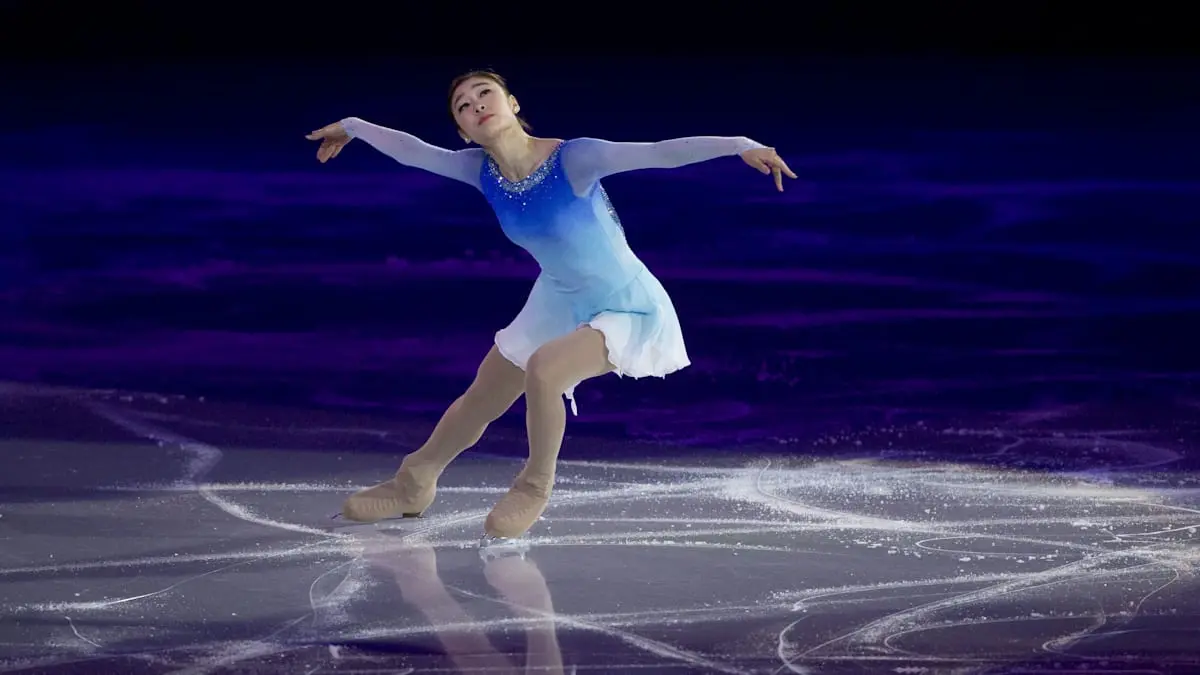
Kim Yuna, the figure skating superstar who catapulted South Korea into the global spotlight, stood at the podium of the United Nations General Assembly in late 2017 – not in a glittering costume, but in a black pantsuit and white blouse. Her message was not about jumps or spins, but about peace. She was there to advocate for the Olympic Truce resolution ahead of the 2018 Winter Olympics in Pyeongchang, a city in her home country.
That moment encapsulated the unusual path of an athlete who had already achieved everything in her sport. Kim Yuna is arguably the greatest figure skater of her generation, the first South Korean to win an Olympic gold in figure skating (Vancouver 2010), and a two-time world champion. Yet when the Olympic Games came to South Korea for only the second time in history, she was not a competitor. Instead, she was chosen for the highest honor: lighting the Olympic cauldron during the opening ceremony.
Early Career and Rise to Stardom
Born in 1990 in Bucheon, a city near Seoul, Kim Yuna started skating at age six after being inspired by a TV show. Her natural talent was evident early. By age 12, she was already competing internationally and breaking records. She burst onto the senior scene in 2007, winning the World Junior Championships and then the senior World Championships in 2009. Her style combined flawless technique, incredible jumping ability, and artistic elegance. Fans and judges alike were mesmerized.
The 2010 Vancouver Olympics were her crowning achievement. She entered as the favorite and delivered a breathtaking short program followed by a near-perfect free skate. She scored a world record total of 228.56 points, a mark that stood for years. That gold medal was historic: it was South Korea's first Olympic gold in figure skating, and only its second gold in any discipline outside of short track speed skating. The nation erupted in joy. Kim Yuna became a household name and a national treasure.
Life After Vancouver: Fame and Responsibility
The fame that followed was overwhelming. Wherever she went, crowds gathered. She could not walk down the street without being recognized. Initially, she struggled with the attention, but later learned to appreciate it. In interviews, she expressed gratitude for the support from Korean fans. She also took on a larger role: promoting winter sports in a country that, at the time, was not traditionally a winter sports powerhouse outside of short track.
In 2011, during the bid for the 2018 Winter Olympics, Kim Yuna served as an official ambassador. She traveled to Durban, South Africa, where the International Olympic Committee voted. Her presence, combined with South Korea's strong bid, helped Pyeongchang win the Games. It was a huge victory for the country, and Kim Yuna was at the center of it.
The Sochi Controversy
After the bid win, Kim Yuna returned to competition. She regained her world title in 2013, setting her up as the favorite for the 2014 Sochi Olympics. There, she skated a stunning short program, taking the lead. In the free skate, she performed a clean routine that many considered superior. However, the judges awarded gold to Russia's Adelina Sotnikova, a 17-year-old who had skated after Kim and performed with great energy but was widely regarded as inferior in technique and artistry. The decision sparked outrage worldwide. Fans, media, and even fellow skaters like Katarina Witt criticized the scoring. The Korean president at the time, Park Geun-hye, publicly consoled Kim, saying her performance would never be forgotten. Despite the controversy, Kim Yuna maintained her composure and gracefully accepted the silver medal, refusing to blame the judges.
Many expected her to continue for another four years to seek redemption at the home Games in Pyeongchang. But Kim Yuna had already made up her mind. The Sochi disappointment, combined with the physical toll of years of training, led her to announce her retirement in May 2014. She explained that figure skating becomes harder with age; injuries accumulate, and the body does not respond as before. She had achieved her dreams, and it was time to move on.
A Different Role at the Home Games
Kim Yuna did not disappear from the public eye. Instead, she remained active as a global ambassador for Pyeongchang 2018. She participated in promotional events, gave speeches, and worked with the UN to promote the Olympic Truce. In her UN address, she eloquently spoke about the power of sports to bridge divides, particularly between North and South Korea. She said the Pyeongchang Games were perhaps the most sincere attempt to cross the frozen borders between the two Koreas and create a peaceful environment.
Speculation about whether she would light the Olympic flame had been rife for months. In the end, the organizers confirmed that Kim Yuna would be the final torchbearer. At the opening ceremony on February 9, 2018, she glided across the stage in a white coat and gloves, holding the torch, and ascended to the cauldron. The moment was electric, a fitting tribute to the athlete who had done more than anyone to put South Korea on the winter sports map.
Legacy and Impact
Kim Yuna's impact on figure skating in South Korea is immeasurable. After her Vancouver gold, a boom occurred. Thousands of children enrolled in skating lessons. Rinks were built across the country. She inspired a generation, including future champions like the young skater Yuna Kim (no relation). She also helped shift the perception of winter sports in a country where short track and speed skating had dominated. Her elegance and success made figure skating a mainstream interest.
Despite retiring, Kim Yuna continued to be involved in charitable work and occasionally performs in ice shows. She lives a relatively quiet life in Seoul, where fans have learned to respect her privacy. She remains a beloved figure, often called “Queen Yuna.”
The decision not to compete at Pyeongchang was a surprise to many, but it reflected her pragmatic approach. She knew her body could no longer endure the grueling training required to win another Olympic medal. Instead, she chose to contribute as an ambassador, using her voice to promote the values of Olympism – excellence, friendship, and respect. In her final act on the Olympic stage, she lit the flame that represented hope for unity between two Koreas.
From Vancouver to Sochi, and finally to Pyeongchang, Kim Yuna’s journey is a testament to grace under pressure. She did not let the Sochi scandal define her legacy; she defined it herself – as a champion who used her platform for peace. She once said at the UN: “These Games may be the most sincere attempt to cross frozen borders and create a peaceful environment.” And with that, she secured a place not only in sports history but in the larger story of international diplomacy.
Source: DIE WELT News