

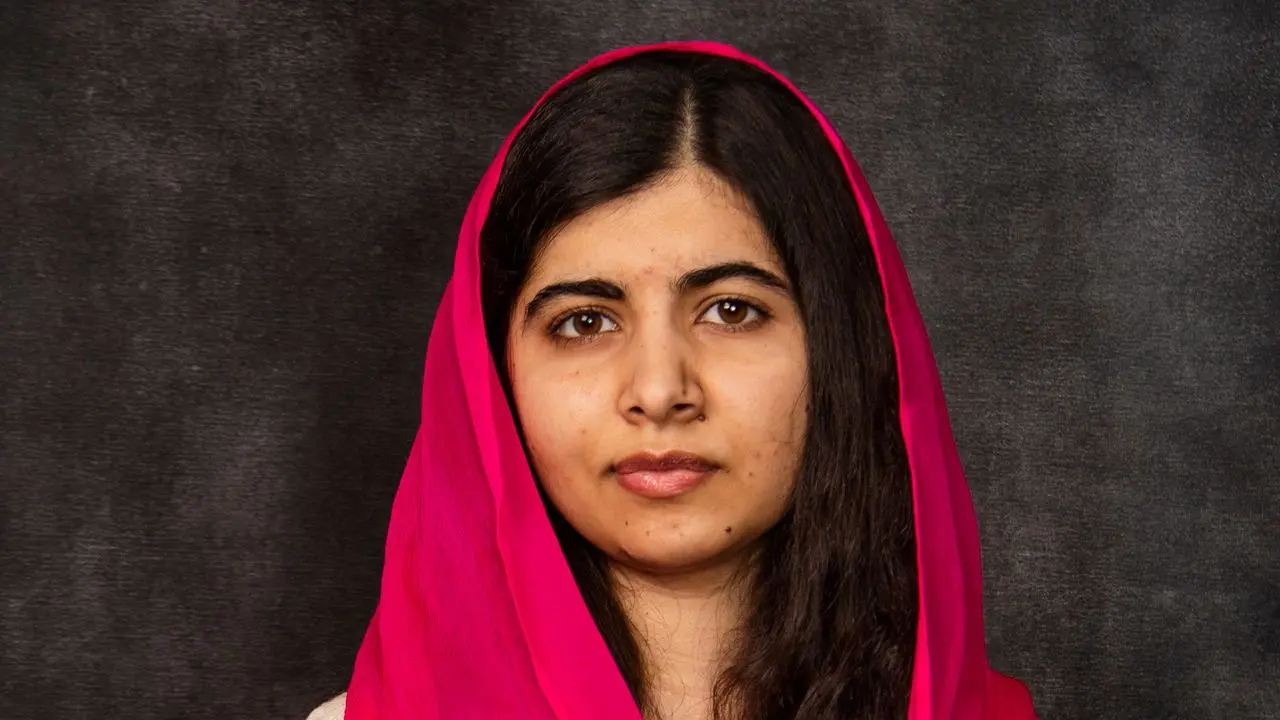
Malala Yousafzai is a name that resonates worldwide. As the youngest Nobel Peace Prize laureate in history, an Oxford graduate, and the founder of the Malala Fund, she has become a symbol of courage and resilience in the fight for girls' education. Yet, beneath the public persona lies a complex, vibrant individual with surprising interests and a rich personal history. This article delves into seven lesser-known facts about Malala Yousafzai, offering a fuller picture of the activist, student, and young woman who continues to inspire millions.
1. A Secret BBC Blogger at Age 11
Long before Malala became a global icon, she was a child blogger writing under the pseudonym Gul Makai. At just 11 years old, she began documenting life under the Taliban regime for the BBC Urdu service. Her diary entries described the fear and oppression in Pakistan's Swat Valley, where the Taliban had banned girls from attending school. Malala's posts provided an intimate, often heart-wrenching glimpse into the daily challenges of living under extremist rule—the sound of gunfire, the closure of schools, and the constant threat of violence. The pseudonym protected her identity, but her voice was already powerful. The blog gained international attention and later inspired the 2020 biographical drama Gul Makai. Today, the original entries remain archived on the BBC website, a testament to her early courage and the power of storytelling.
2. An Outstanding Education Against All Odds
Education has always been central to Malala's identity. Her father, Ziauddin Yousafzai, ran the Khushal Public School in Mingora, where Malala was a star student. When the Taliban seized control of Swat, they systematically destroyed girls' schools and threatened anyone who dared to educate females. Despite the danger, Malala continued to attend classes secretly. On October 9, 2012, while riding a school bus, she was shot in the head by a Taliban gunman. The assassination attempt nearly killed her, but she was airlifted to a hospital in Birmingham, England, where she underwent extensive surgery and rehabilitation. After her recovery, Malala settled in Birmingham and enrolled at Edgbaston High School for Girls. She excelled academically and went on to study Philosophy, Politics, and Economics (PPE) at Lady Margaret Hall, University of Oxford, graduating in 2020. Her educational journey—from a war-torn valley to one of the world's most prestigious universities—embodies her belief that 'one child, one teacher, one book, and one pen can change the world.'
3. A Gift for Memorable Quotes and Speeches
Malala Yousafzai is not only an activist but also a gifted orator. Her speeches and writings are filled with poignant, shareable lines that have become mantras for millions. In her memoir I Am Malala, she wrote: 'When the whole world is silent, even one voice becomes powerful.' This sentiment echoed through her historic address at the United Nations' first-ever 'Youth Takeover' in 2013, where she declared: 'Let us wage a global struggle against illiteracy, poverty, and terrorism, and let us pick up our books and pens. They are our most powerful weapons.' Other notable quotes include: 'We realize the importance of our voices only when we are silenced' and 'If you want to end terrorism, send your children to get an education.' Her words are carefully crafted to mobilize action while remaining deeply personal. They often draw on her own experiences—as a child who loved learning, as a survivor, and as a young woman determined to see a world where every girl has access to education.
4. Close Friendships with Fellow Gen-Z Activists
Malala's inner circle includes some of the most prominent young activists of her generation. She is close friends with climate activist Greta Thunberg, who once visited her at Oxford. The two have spoken about the intersectionality of their causes—how climate change disproportionately affects girls' education and how systemic inequality fuels both environmental and gender injustice. Malala is also friends with Emma González, a gun control advocate from the March for Our Lives movement. Their bond reflects a shared understanding of the power of youth-led movements. In her Vogue interview, Malala explained: 'I know the power that a young girl carries in her heart when she has a vision and a mission.' These friendships provide mutual support and amplify each activist's message. Malala often joins them at events or on social media, proving that solidarity across movements is essential for lasting change.
5. Evolving Views on Marriage and Partnerships
In her conversation with Sirin Kale for Vogue's July 2020 cover story, Malala opened up about her changing perspective on marriage. 'I still don't understand why people have to get married,' she said. 'If you want to have a person in your life, why do you have to sign marriage papers? Why can't it just be a partnership?' She admitted that until her second year at university, she believed she would never marry or have children, focusing solely on her activism. But she acknowledged growth: 'You don't always remain the same person. You change, and you grow.' This honesty about her evolving worldview is refreshing. It reflects the tension many young women feel between traditional expectations and personal ambitions. For Malala, her work remains the priority—she has often said that her 'mission is education for all girls'—but she leaves room for the possibility that life might unfold differently than planned.
6. A Self-Confessed 'Twilight' Fan
Among the surprising details in Malala's memoir is her confession that she was an avid reader of Stephenie Meyer's Twilight series. During the height of the Taliban's presence in Swat, when she was around ten years old, Malala and her friend would read the vampire romance novels obsessively. 'We longed to be vampires,' she wrote. For a child living in constant fear, the fantasy world offered an escape—a place where power and immortality replaced vulnerability. The revelation humanizes Malala, reminding us that she was once a regular girl with ordinary interests. It also highlights how literature can provide solace and strength even in the darkest times. She later developed a taste for other book genres, but Twilight remains a nostalgic touchstone from her youth.
7. A Love for Comedies and Pop Culture
When she is not advocating for girls' education or studying, Malala enjoys unwinding with TV comedies. She is a huge fan of Ted Lasso, the Apple TV+ series about an American football coach leading a British soccer team. She even noted that the character's mustache reminds her of her father's. Another favorite is the animated sci-fi show Rick and Morty, which she watched while eating Jamaican curries. This love of light-hearted entertainment balances the intensity of her activism. It also counters the common perception of young activists as constantly serious or burdened. Malala, like many of her peers, finds joy and relaxation in humor. These small details—watching a comedy, sharing a meal, embracing pop culture—paint a picture of a well-rounded young woman who, despite her extraordinary achievements, still enjoys the simple pleasures of life.
These seven facts reveal the many layers of Malala Yousafzai. From her earliest days as a secret blogger to her current role as a global advocate and Oxford graduate, she continues to defy expectations. Her story is not just about survival; it is about living fully, with curiosity, humor, and an unwavering commitment to making the world a better place for every girl.
Source: Vogue Germany News