

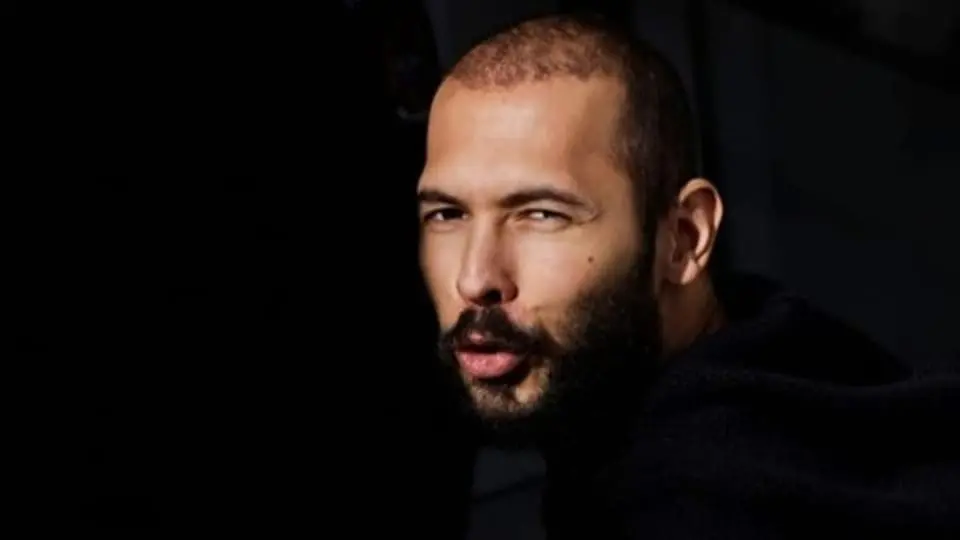
Andrew Tate loves to pose with fast cars, thick cigars, and provocative, misogynistic statements. Many people are repulsed by his rhetoric. Yet, for his lifestyle, the influencer receives applause, especially from young men. In the United Kingdom, his influence has grown so significantly that some schools have coordinated countermeasures. But what drives this fascination, and how is it playing out in Swiss schools?
Who Is Andrew Tate?
Andrew Tate, 36, reaches a global audience of millions through his social media presence. Raised in the United Kingdom, he first gained fame as a kickboxer, winning multiple world titles. He later reinvented himself as a self-made celebrity, flaunting a luxurious lifestyle filled with expensive cars, private jets, and exotic vacations. His content, often laced with aggressive masculinity, quickly found a niche among young men disenchanted with modern gender discourse.
Tate operates across multiple platforms, including TikTok, YouTube, Instagram, and X (formerly Twitter). His videos frequently feature advice on wealth, dating, and success, but they also promote sexist and homophobic stereotypes. Due to these controversial views, he has been temporarily banned from several platforms. Since late December, Tate has been in pre-trial detention in Romania, where he moved in 2017 to launch casino businesses. Alongside his brother, he is accused of luring women into fake relationships and coercing them into prostitution. As of now, no formal indictment has been filed.
At Swiss Schools: Awareness Without Alarm
The situation in Swiss schools contrasts sharply with that in the UK. The Swiss Federation of Teachers (LCH) has confirmed that it currently does not plan any awareness campaigns. However, the organization states it would take action if the influencer's influence became a problem within classrooms.
When speaking directly with teachers, a more nuanced picture emerges. Daniel Gebauer, who has taught upper secondary classes in the canton of Bern for 20 years, was surprised by the level of awareness among his students. "When I asked who had ever heard of Andrew Tate, hands immediately went up. At least half of the class," he recalls.
Knowing vs. Liking: The Distinction
Hearing the name is one thing; admitting admiration is another. Teacher Daniel Gebauer is aware of this complexity. "I assume their answers are filtered. But the fact that so many boys know Andrew Tate already says something," he notes. Many students, Gebauer found, are well aware of the controversy surrounding Tate. "They know the accusations against him – and the public opinion about it." They can also differentiate, he observes: "They consider his misogyny, homophobic remarks, and racism as beyond the pale."
Most students feel that the old role of the misogynistic macho male is outdated, and they welcome the evolution of gender roles. Yet, the search for a new masculinity is not straightforward. Constant lectures about what is permissible and what is not can be a conflicting experience for teenagers.
The Appeal of Cool Nonchalance
What resonates with young men, Gebauer observes, is Tate's nonchalance: "That someone says his opinion without trying to please – that impresses them." Tate's willingness to defy societal norms, to say politically incorrect things, and to appear unapologetically confident is attractive to adolescents who feel suffocated by constant political correctness. This rebelliousness, even when coupled with hateful ideology, can have a magnetic pull.
Tate presents himself as a figure who has \"escaped the matrix,\" offering a clear, if toxic, set of rules for success. For young men struggling with identity, career goals, and relationships, his black-and-white worldview can seem refreshingly simple. He validates their frustrations with a system they feel is stacked against them, providing a sense of belonging in an online community of like-minded followers.
The Allure of the Forbidden
Andrew Tate was one of the most searched terms on Google in 2022. His openly macho counterculture finds a ready audience. That he is currently in pre-trial detention in Romania may not necessarily damage his reputation; for some, it may even enhance it, casting him as a persecuted figure fighting against a corrupt establishment.
According to Daniel Gebauer, Andrew Tate is a kind of symptom. His success dramatically illustrates the tensions young men face today. "They are searching for their path between old role models and new expectations," Gebauer observes. "The forbidden or socially stigmatized also exerts its allure." Tate's relentless promotion of traditional gender roles – men as providers and dominators, women as submissive and objectified – offers a stark contrast to the ambiguity of modern relationships. This clarity, however misguided, can be intoxicating for some.
Background and Career
Andrew Tate's journey from kickboxing champion to internet provocateur is instructive. Born in Washington, D.C., and raised in Chicago and Luton, he began training in martial arts at a young age. By 2009, he was a world champion in kickboxing, later winning multiple ISKA titles. His athletic discipline translated into a brand of relentless self-promotion. He leveraged early YouTube videos into a massive online presence, where he dispensed advice on everything from starting a business to attracting women.
Tate's business acumen includes a online coaching platform called \"Hustler's University\" (later rebranded as \"The Real World\"), where subscribers pay monthly fees to access courses on affiliate marketing, crypto trading, and e-commerce. This pyramid-like model has generated tens of millions of dollars, but it also came under scrutiny for its focus on recruiting and income promises. Critics argue that the program exploits disillusioned young men, trapping them in a system that enriches Tate while offering little real-world value.
The human trafficking charges against him arose from a Romanian investigation that began in 2022. Prosecutors allege that Tate and his brother, together with two female accomplices, formed an organized crime group to recruit women through false promises of love and then coerce them into producing adult content and performing sex acts for paying clients. The Tates deny all charges, claiming they are victims of a smear campaign as they await trial.
The Role of Social Media and Algorithms
The rapid spread of Tate's ideology cannot be separated from the mechanics of modern social media. Algorithms reward provocative, emotionally charged content because it drives engagement – likes, shares, comments, and most importantly, watch time. Tate's short videos, often stitched with other creators or set to dramatic music, are optimized for virality. Even users who disagree with him often share his content to criticize it, inadvertently amplifying his reach.
Researchers have noted that platforms like TikTok and YouTube serve as radicalization pathways for young men. A user searching for self-improvement or fitness videos can quickly be funneled into more extreme content, including the manosphere of misogyny, anti-feminism, and men's rights activism. Tate sits at the apex of this ecosystem, but he is not alone; he inherits a tradition from figures such as Jordan Peterson, Milo Yiannopoulos, and the earlier pick-up artist community.
The Swiss teacher Daniel Gebauer believes that simply banning Tate from platforms is not the solution. Instead, he argues that educators have a responsibility to understand why these figures appeal to students. "We must make more of an effort to understand young people, and not immediately dismiss what interests them," he says. This requires open, non-judgmental dialogue in classrooms, where students can critically examine the ideas behind Tate's persona without feeling attacked.
Navigating the Masculinity Crisis
The phenomenon of Andrew Tate reflects a broader societal shift: the breakdown of traditional masculinity without a clear, positive alternative. Young men today face unprecedented expectations to be emotionally intelligent, equal partners, while simultaneously navigating a culture that still valorizes traits like strength, dominance, and material success. This contradiction creates a vacuum that figures like Tate are all too willing to fill.
Tate offers a return to a simpler, if regressive, ideal. He tells his followers that they should be the \"alphas\" in every room, that women are property, and that the only path to happiness is wealth and power. For some, this message is liberating because it eliminates ambiguity. Yet, the long-term consequences of adopting such a worldview can be damaging – not only to women but also to the men themselves, who may struggle to form healthy relationships or find fulfillment beyond material accumulation.
In Switzerland, while no nationwide campaigns are currently planned, individual teachers like Gebauer are taking matters into their own hands. They incorporate discussions about Tate into their civics and ethics lessons, encouraging students to deconstruct his claims and understand the social and psychological mechanisms behind his appeal. Some schools have reported that exposure to Tate's content correlates with increased sexist behavior among students, such as catcalling or dismissive attitudes toward female classmates.
The English approach, where schools collaborate with anti-extremism charities like Educate Against Hate, provides a model for proactive engagement. These programs teach media literacy and critical thinking, helping students recognize manipulation tactics used by online influencers. The Swiss Federation of Teachers is monitoring the situation closely, ready to act if the influence becomes a source of friction or radicalization within school environments.
Broader Implications for Society
The story of Andrew Tate is not just about one man; it is a cautionary tale about the vulnerabilities of adolescence in the digital age. As young people spend more time online and less time in face-to-face communities, their moral compass is increasingly shaped by algorithm-driven content. Parents, educators, and policymakers must grapple with how to equip young men with the tools to resist simplistic, hateful narratives while offering them positive role models for masculinity.
Several grassroots initiatives have emerged in response to Tate's influence. Mentorship programs that pair young men with successful, empathetic adults in fields like healthcare, education, and the arts aim to show that strength can coexist with kindness. Online campaigns by feminist and men's health organizations provide counter-messaging that validates the struggles of young men without demonizing women. However, these efforts often lack the viral scale of Tate's content, leaving them at a disadvantage.
In the end, the fascination with Andrew Tate may be a symptom of a deeper need: the search for purpose and identity in a world that often feels chaotic and uncertain. For educators like Daniel Gebauer, the goal is not to stamp out this fascination but to redirect it toward healthier expressions of self-worth and human connection. "If we can show young men that they don't have to choose between being respected and being kind, we will have neutralized the appeal of figures like Andrew Tate," he says. It remains to be seen whether society can rise to this challenge before the manosphere claims another generation of impressionable followers.