

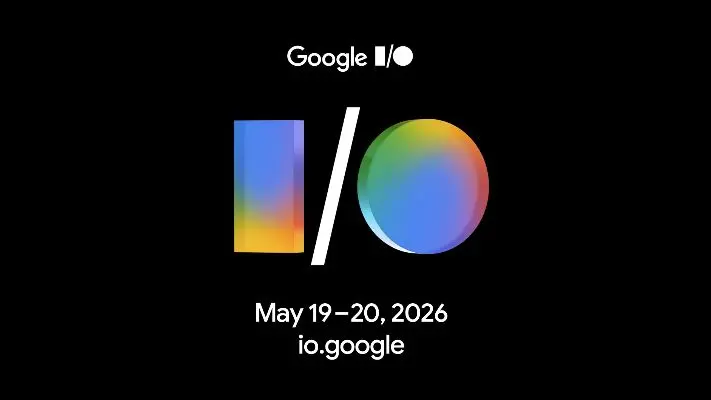
Google I/O has long been the stage where the company unveils its most ambitious projects, and 2026 is shaping up to be no exception. Scheduled for May 20-22 at the Shoreline Amphitheatre in Mountain View, California, the conference will once again blend in-person and virtual attendance. For those who cannot make the trip, Google will offer a free livestream on its official Google I/O website and YouTube channel. The keynote is expected to start at 10 a.m. PT on the first day, followed by a slate of technical sessions, product demos, and hands-on coding labs.
How to watch Google I/O 2026
The primary way to watch the keynote and major announcements is through Google's dedicated I/O platform, which will host a single live stream that includes the main keynote, the developer keynote, and select breakout sessions. Google also plans to simulcast the event on its official YouTube channel, with real-time captions and optional language dubbing. For attendees on-site, the keynote will be presented at the Shoreline Amphitheatre, and overflow rooms will be available. Virtual attendees can register for free to access session recordings, Q&A boards, and interactive codelabs that will remain available on-demand for several weeks after the event.
What to expect: Android 16 and Pixel 10
The most anticipated announcement is likely Android 16, the next major version of the world's most popular mobile operating system. Early developer previews suggest a focus on generative AI integration at the system level, with new APIs for on-device large language models. Expect improvements to privacy, battery life, and multitasking, especially for foldables. Google is also expected to announce the Pixel 10 series during the hardware portion of the keynote. The Pixel 10 is rumored to feature a custom Tensor G6 chip with a dedicated AI accelerator, a revamped camera system with ultra-wide aerial photography capabilities, and a new design language that borrows from the Pixel Watch 3's minimalist aesthetic.
Gemini and the future of AI at Google
Artificial intelligence will dominate the conversation, as Google continues to integrate its Gemini family of models across products. I/O 2026 is likely to see the public launch of Gemini Ultra 2.0, a multimodal model capable of processing video, audio, and text in real time. Google may also introduce new developer tools for building AI-powered applications, including Project Mariner agents that can autonomously browse the web on a user's behalf. Additionally, expect updates to Google Search that incorporate more conversational answers, and a deeper integration of Gemini into Workspace apps like Gmail, Docs, and Sheets.
Wear OS, ChromeOS, and other platforms
Google will probably showcase the next version of Wear OS, which could bring tighter integration with the Pixel Watch and improved health-tracking features. ChromeOS may receive a major update that enables seamless running of Android apps without emulation, thanks to the ARCVM advancements. Google TV and Android TV are also due for a refresh, with new AI-driven recommendations and smart home controls. For developers, there will be sessions on Flutter, Firebase, and the latest advancements in WebGPU and WebAssembly.
AR, VR, and the future of immersive computing
After years of rumors, Google might finally unveil a new mixed-reality headset powered by Android XR. Leaks suggest a lightweight design with passthrough cameras, hand tracking, and integration with Google Maps for augmented reality navigation. I/O 2026 could also see updates to Google Lens and the introduction of spatial computing APIs for third-party developers. While the headset may not ship until later in the year, the developer kit is likely to be announced at the conference.
Privacy and security updates
Google will likely announce new privacy features, including on-device processing for more AI tasks, expanded end-to-end encryption for RCS messages, and a new Privacy Dashboard for connected home devices. The company is under increasing regulatory pressure, so expect a strong emphasis on user control and data minimization. Developers will get updates on the Privacy Sandbox for Android and new tools for building privacy-preserving apps.
How to make the most of I/O as a developer
Beyond the keynote, I/O offers hundreds of technical sessions covering everything from Kotlin multiplatform to machine learning model optimization. Virtual attendees can join live Q&As, participate in coding challenges, and earn digital badges. Google also runs a series of 'codelabs' — self-paced tutorials that provide real-world practice with new APIs. For those attending in person, the Sandbox area will have demos of unreleased hardware and opportunities to speak directly with Google engineers.
The conference schedule typically includes a second-day 'Developer Keynote' focused on tooling and platform updates, followed by deep dives into specific topics like TensorFlow, Jetpack Compose, and cloud infrastructure. Google also hosts partner showcases and a startup pitch competition. Networking events, both online and offline, will be available for registered participants.
Rumors and speculation
While many announcements are expected, some are still under wraps. Industry analysts predict Google will unveil a new subscription bundle that combines Google One, YouTube Premium, and Fitbit Premium at a discounted rate. There is also chatter about a next-generation Chromecast device with native gaming capabilities, powered by the Tensor chip. Additionally, Google may announce a new health-tracking feature for the Pixel Watch that leverages AI to detect early signs of respiratory illness through sound analysis.
On the enterprise side, Google Cloud is expected to introduce new AI agents for customer service and supply chain management, as well as a suite of cybersecurity tools using the Gemini model. The company may also launch a new version of Google Meet with real-time translation and transcription powered by its latest speech recognition algorithms.
Finally, Google might use I/O to preview a new social media or communications app that integrates with its existing ecosystem. Given the recent changes in the social media landscape, a decentralized platform built on ActivityPub could be on the horizon. However, none of these rumors have been confirmed by Google, so attendees should keep an open mind.
With so much on the docket, Google I/O 2026 promises to be a landmark event that will shape the direction of the company for years to come. Whether you are a seasoned developer or a casual tech enthusiast, the conference offers a glimpse into the future of computing, AI, and human-computer interaction. Be sure to mark your calendars and prepare for a week of announcements, innovation, and collaboration.
Source: TechRadar News