

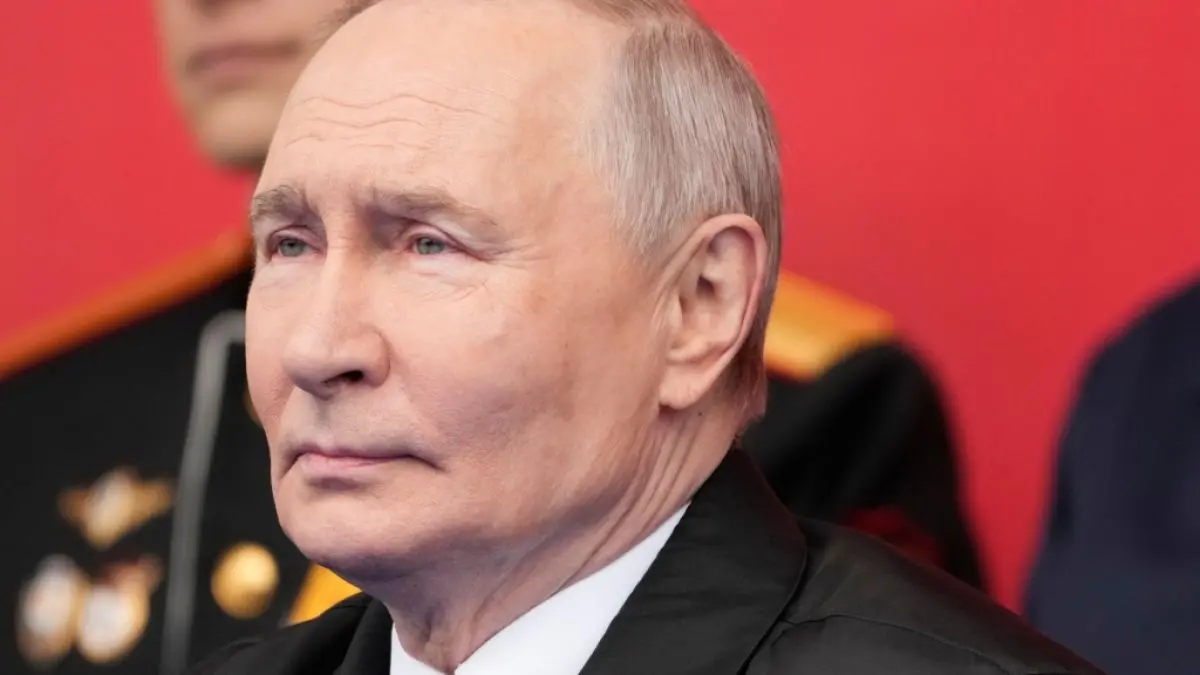
The situation for Russian President Vladimir Putin has become increasingly precarious, as a series of Ukrainian drone strikes and internal political tensions challenge his grip on power. The war, now in its third year, continues to inflict heavy costs on Russia—both in human lives and economic stability. Recent developments, including attacks on strategic energy assets and naval vessels deep within Russian territory, underscore the widening scope of the conflict. At the same time, speculation about Putin's health and the possibility of a coup are fueling uncertainty within the Kremlin, raising questions about how much longer the Russian leader can maintain control.
Ukrainian Drone Strikes Shake Russian Energy and Military Infrastructure
In the early hours of May 13, a coordinated drone strike targeted the Tammanneftogaz oil terminal in the Krasnodar region, a critical node in Russia's energy export infrastructure on the Black Sea coast. Satellite imagery and local reports confirmed that parts of the facility were engulfed in flames, disrupting the flow of oil that finances Moscow's war machine. This attack is part of a broader Ukrainian campaign aimed at crippling Russia's energy revenues and weakening its ability to sustain long-term military operations. The region, relatively far from Ukraine's border, had previously been considered a safe haven for critical infrastructure. However, Ukraine's growing drone capabilities have now made such locations vulnerable. The strike on the terminal followed a pattern of systematic targeting of oil depots, refineries, and pipelines, which experts say could reduce Russia's export capacity by up to 10 percent over the coming months. Such losses are likely to further strain the Russian budget, already under pressure from Western sanctions and the cost of the war.
Naval Vulnerability Exposed in Caspian Sea
Perhaps even more striking was the successful Ukrainian attack on a Russian naval vessel in the Caspian Sea, approximately 1,000 kilometers from the nearest Ukrainian-controlled territory. The missile strike hit a Karakurt-class corvette near the port of Kaspijsk, a ship equipped to launch Kalibr cruise missiles that have been used against Ukrainian cities. This operation demonstrated that Ukraine's reach extends into the heart of Russia's southern naval fleet, a region previously perceived as immune to such threats. The attack not only damaged a valuable asset but also forced the Russian Navy to reassess its defensive postures across all its flotillas. Military analysts note that the Caspian Sea has been used by Russia as a launch platform for long-range strikes against Ukraine, and the loss of even one such vessel diminishes Moscow's strike capabilities. Furthermore, the psychological impact of a naval strike so far from the front lines cannot be overstated. It signals to the Russian public that no part of the country is safe from the consequences of the war, potentially eroding faith in the Kremlin's narrative of a distant, manageable conflict.
Growing Internal Tensions and Speculation of Coup
Behind the walls of the Kremlin, the political atmosphere is described as increasingly tense. Reports from independent sources and exiled Russian analysts indicate that the war's failures are breeding discontent among elites and security factions. In a rare moment of apparent candor, Putin recently commented that the conflict might be approaching its end, a statement widely interpreted as an attempt to calm growing public anxiety. However, such remarks have also fueled speculation about cracks in the regime's unity. Rumors of a potential coup are circulating, though concrete evidence remains scarce. The Russian population, especially in urban centers like Moscow, is reportedly stockpiling cash and essential goods, bracing for economic turmoil. The government has imposed strict censorship on war-related news, but the whispers of internal power struggles persist. Some political observers believe that the emergence of alternative centers of power, such as the Wagner Group's shadow network or influential oligarchs, could pose a challenge to Putin's authority if the war continues to go poorly. The president's recent decision to replace several key military commanders also hints at a desire to consolidate control, but it also exposes the fractures within the military establishment.
Putin's Health Under Scrutiny
Vladimir Putin's physical appearance has become a topic of intense debate following his appearance at the annual Victory Day parade on May 9. Observers noted a puffy face, tired eyes, and a generally aged demeanor, which contrasted sharply with the vigorous image he has cultivated for decades. Social media platforms were flooded with speculations about possible health issues, ranging from chronic stress to more serious ailments. Some commentators even raised the possibility of body doubles, pointing to minor discrepancies in facial features. While these claims are largely unverified, they reflect a broader narrative of a regime showing signs of strain. For a leader who has built his reputation on strength and stability, any sign of weakness can have political repercussions. Victory Day is meant to showcase Russia's military might and national unity, but this year the focus shifted to the president's personal condition. Analysts say that the Kremlin's slow response to these rumors—neither confirming nor denying them—has only fueled further speculation, contributing to an atmosphere of uncertainty.
Record Casualties and Material Losses Strain Russian Military
Russia's military continues to suffer staggering losses in the war. According to Ukrainian estimates, which cannot be independently verified, Russia has lost over 1.34 million personnel (killed and wounded) since the start of the full-scale invasion. Material losses are equally severe, with preliminary figures indicating the destruction of nearly 12,000 tanks, 284,000 drones, and thousands of artillery systems. These numbers, even if inflated, point to a massive depletion of Russia's Soviet-era stockpiles and modern military hardware. The strain on the armed forces is evident in the lowering of recruitment standards, the use of tactics that resemble human-wave assaults, and the growing reliance on convicts and foreign mercenaries. The Russian defense industry is working at maximum capacity but cannot replace losses at the current rate. Additionally, the ongoing sanctions limit access to critical components, from microchips to advanced machinery. As a result, the quality of equipment reaching the front lines has degraded, with reports of malfunctioning vehicles and a lack of precision munitions. The cumulative effect of these losses is a military that is physically and logistically stretched, possibly incapable of conducting large-scale offensive operations in the near future. The Kremlin continues to downplay the severity, but the data from open-source intelligence and satellite imagery paints a grim picture.
These developments collectively suggest that Vladimir Putin's political and military position is more fragile than it has ever been. With the Ukrainian campaign expanding into Russian territory, a military under immense pressure, and a political system that remains opaque but increasingly nervous, the coming months will test the resilience of the Russian state. Whether the Kremlin chief can weather this storm or is on the brink of a critical failure remains to be seen.
Source: News.de News