

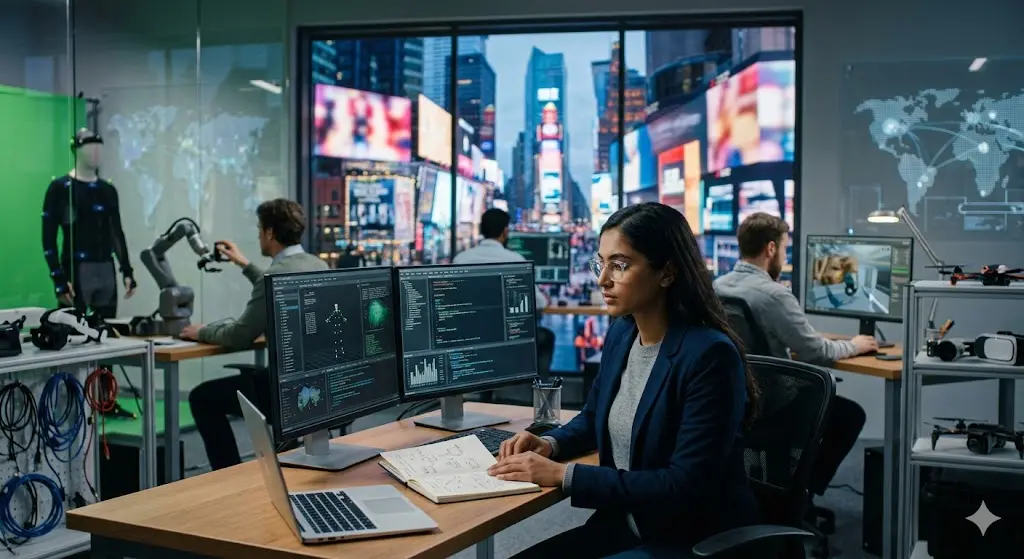
Automation is already reshaping global entertainment, from AI-assisted film editing to virtual concerts and personalized streaming recommendations. The bigger shift happening in 2026 isn’t just about replacing manual work — it’s about changing how audiences consume content and how creators produce it faster, cheaper, and at a much larger scale.
Research on automation and the future of global entertainment shows that AI-driven production, smart recommendation systems, virtual performers, and automated distribution are changing movies, music, gaming, and streaming worldwide. Companies adopting automation are reducing production costs, increasing audience engagement, and expanding global reach faster than traditional entertainment businesses.
What Is Automation in Global Entertainment?
Automation: the use of software, artificial intelligence, robotics, and machine-learning systems to perform creative, technical, or repetitive tasks with minimal human involvement.
Entertainment used to depend heavily on large production teams and expensive infrastructure. That’s changing quickly. Streaming platforms now automate recommendation engines, film studios use AI for editing assistance, gaming companies generate dynamic environments automatically, and music platforms predict listener behavior with surprising accuracy.
Research on automation and the future of global entertainment also points toward something many people didn’t expect a few years ago: audiences are becoming comfortable interacting with virtual personalities, AI-generated content, and algorithm-driven experiences.
Here’s the thing most people overlook. Automation isn’t only helping giant studios. Independent creators are probably benefiting even more because they can now produce high-quality content without massive budgets.
A small creator with AI editing software and automated publishing tools can compete with established media brands in ways that simply weren’t possible before.
Why Automation Matters in 2026
Entertainment is becoming more global every year, and automation is one reason why.
Streaming services now distribute content across dozens of countries instantly. AI translation tools create subtitles and dubbing faster than traditional localization teams. Music recommendation systems help artists reach listeners across continents without traditional radio promotion.
In my experience, this is where automation becomes more interesting than people think. Most conversations focus on job replacement, but the bigger story is accessibility. More creators can enter the market now.
A gaming studio in a small city can build worldwide audiences because automated systems handle distribution, analytics, ad targeting, and customer engagement.
Automation Is Changing Audience Expectations
Viewers now expect:
Personalized recommendations
Instant access to content
Interactive entertainment
Faster release cycles
Multi-language availability
That expectation creates pressure on entertainment companies. Automation helps them keep up.
What’s fascinating is that audiences often don’t even notice automation anymore. When a streaming platform predicts exactly what you want to watch next, that’s automation working quietly in the background.
The Rise of AI-Generated Entertainment
AI-generated scripts, music composition tools, virtual influencers, and digital actors are already appearing across the industry.
Some people love it. Others hate it.
Personally, I think fully AI-created entertainment still lacks emotional depth in many cases. Human storytelling carries nuance that algorithms still struggle to replicate naturally. But hybrid production models — where humans and AI collaborate — are growing incredibly fast.
That hybrid model will probably dominate the next decade.
How Automation Is Transforming Entertainment Industries
Film and Television
Automation now assists with:
Video editing
Scene rendering
Script analysis
Audience prediction
Marketing optimization
Studios use predictive analytics to estimate audience reactions before release. That reduces financial risk and helps companies decide where to invest production budgets.
A realistic example would be a streaming platform analyzing millions of viewer interactions before approving a new science-fiction series. Instead of relying only on executive instincts, algorithms help identify trends likely to succeed globally.
Music Industry
Music automation is moving quickly.
AI tools can now generate background music, assist with mastering tracks, suggest melodies, and personalize playlists. Independent musicians save time while streaming platforms increase engagement.
Still, there’s a weird twist here.
Some listeners are beginning to prefer imperfect human-made music because it feels more authentic. That’s a counterintuitive trend many analysts missed early on.
Gaming Industry
Gaming may become the largest automation-driven entertainment sector.
Procedural world generation, AI-driven NPC behavior, adaptive difficulty systems, and automated testing already reduce development time significantly.
Games are also becoming more personalized. Some systems now modify gameplay experiences based on player behavior in real time.
That level of customization was nearly impossible a decade ago.
Live Events and Virtual Entertainment
Virtual concerts exploded in popularity after global digital adoption accelerated. Automation now powers ticketing systems, audience engagement tracking, virtual avatars, and real-time language translation during events.
Some entertainment brands are even experimenting with AI hosts and automated event moderation.
It sounds futuristic, but parts of it are already happening.
How to Adapt to the Future of Automated Entertainment
1. Focus on Human Creativity
Automation handles repetitive tasks well. Emotional storytelling still matters most.
Creators who combine human originality with automated tools will likely outperform those relying entirely on either side.
2. Learn AI-Assisted Production Tools
Video editors, music producers, podcasters, and marketers should understand AI-powered platforms now instead of waiting later.
You don’t need to become a programmer. You just need to know how automation improves workflows.
3. Build Multi-Platform Content
Automated distribution systems reward creators publishing across multiple platforms.
One podcast can become:
Short-form videos
Blog content
Social clips
Audio snippets
Email content
Automation reduces manual work dramatically here.
4. Use Data Without Losing Personality
Analytics matter, but personality matters more.
One mistake I see often is creators becoming too dependent on algorithms. Audiences still connect with authenticity first.
5. Prepare for Constant Change
Entertainment technology evolves incredibly fast. Strategies working now might feel outdated in two years.
Adaptability is becoming more valuable than technical perfection.
Common Misconception About Automation
Automation Will Replace All Creative Jobs
That’s probably exaggerated.
Automation changes creative roles more than it eliminates them entirely.
Editors may spend less time cutting footage manually and more time refining storytelling. Musicians may use AI tools for production assistance while focusing more heavily on performance and audience connection.
The entertainment industry has always evolved with technology. Radio changed music. Television changed film. Streaming changed distribution.
Automation is simply another major shift.
Expert Tips: What Actually Works
Creators succeeding with automation usually follow one simple principle: they automate systems, not identity.
That difference matters a lot.
A YouTube creator might automate caption generation, scheduling, analytics, and editing assistance. But the personality, humor, opinions, and storytelling remain human.
That balance tends to perform better with audiences.
Here’s what most guides miss. Over-automation can actually damage audience trust. People notice when content feels emotionally empty.
I once watched a fully AI-generated news segment online that looked technically impressive but strangely lifeless. Everything sounded polished, yet nothing felt memorable. That experience convinced me that entertainment still needs human unpredictability.
Expert Tip
Use automation to save time, not erase personality. The creators growing fastest in 2026 are usually combining efficiency with authenticity instead of chasing fully automated production.
Economic Impact of Automation on Entertainment
Automation is also influencing the business side heavily.
Studios reduce operational costs. Streaming companies improve audience retention. Marketing campaigns become more targeted and measurable.
Smaller businesses benefit too.
Independent filmmakers can now access editing tools that once required massive production budgets. Musicians distribute globally without traditional labels. Gaming startups launch faster with automated development support.
That democratization could reshape global entertainment markets over the next decade.
The Future of Global Entertainment Markets
Research on automation and the future of global entertainment suggests several trends will continue growing:
AI-assisted storytelling
Personalized entertainment experiences
Virtual influencers
Interactive streaming
Real-time language localization
Automated content moderation
Immersive digital experiences
Some analysts believe audiences will increasingly interact with entertainment instead of consuming it passively.
That prediction honestly makes sense.
Younger generations already expect personalization everywhere — from gaming to streaming to social platforms.
Entertainment companies ignoring that shift may struggle to stay relevant.
People Most Asked About Research on Automation and the Future of Global Entertainment
How is automation affecting the entertainment industry?
Automation improves production speed, personalization, analytics, and distribution across film, music, gaming, and streaming sectors. It helps companies reduce costs while expanding global audience reach.
Will AI replace actors, musicians, and creators?
Probably not entirely. AI may automate repetitive or technical tasks, but human creativity, emotional storytelling, and audience connection still remain extremely valuable.
Why is automation important in entertainment in 2026?
Automation helps entertainment companies meet growing audience expectations for instant, personalized, and multilingual content while lowering operational costs and improving efficiency.
Can small creators benefit from automation?
Yes. Independent creators now use automated editing, publishing, analytics, and marketing tools to compete with larger entertainment companies more effectively than before.
What are the risks of automation in entertainment?
Risks include reduced creative originality, misinformation, audience distrust, job disruption, and over-reliance on algorithms instead of authentic storytelling.
Is AI-generated entertainment becoming popular?
Yes, especially in music production, virtual influencers, gaming, and personalized streaming experiences. However, audiences still tend to value human-driven creativity and emotional depth.
How does automation improve streaming platforms?
Automation powers recommendation engines, audience analysis, content moderation, targeted advertising, subtitle generation, and viewing personalization.
Final Thoughts
Research on automation and the future of global entertainment shows a clear pattern: automation is becoming deeply integrated into every part of the entertainment ecosystem. From AI-assisted editing to personalized streaming and virtual performers, technology is reshaping how content is created and consumed worldwide.
Still, human creativity remains the real differentiator. Automation may improve speed and efficiency, but audiences continue to connect most strongly with stories, personalities, and experiences that feel genuinely human.
Our Network site provide related offering Guest Posting Services and Press Release News Submission designed to improve brand visibility, media coverage, and organic traffic for businesses looking to scale online presence quickly. Businesses and agencies can use press release distribution services alongside digital marketing services to gain high authority backlinks, stronger SEO ranking, instant publishing exposure, and long-term search growth through targeted online campaigns.